Books
Books I'm reading, have read, and want to read. I'm always looking for recommendations — feel free to reach out.
Books I'm reading
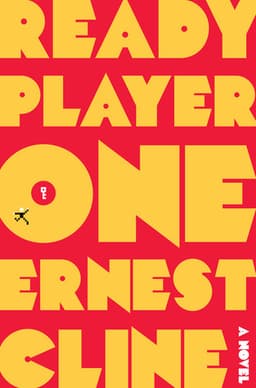
Ready Player One (Ready Player One, #1)
Ernest Cline
Librarian's note: An alternate cover edition can be found hereIN THE YEAR 2044, reality is an ugly place. The only time teenage Wade Watts really feels alive is when he's jacked into the virtual utopia known as the OASIS. Wade's devoted his life to studying the puzzles hidden within this world's digital confines, puzzles that are based on their creator's obsession with the pop culture of decades past and that promise massive power and fortune to whoever can unlock them. But when Wade stumbles upon the first clue, he finds himself beset by players willing to kill to take this ultimate prize. The race is on, and if Wade's going to survive, he'll have to win—and confront the real world he's always been so desperate to escape.
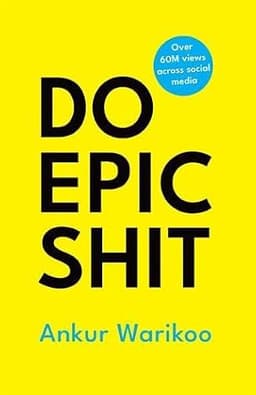
Do Epic Shit
Ankur Warikoo
Ankur Warikoo is an entrepreneur and content creator whose deep, witty and brutally honest thoughts on success and failure, money and investing, self-awareness and personal relationships have made him one of India’s top personal brands. In his first book, Ankur puts together the key ideas that have fuelled his journey – one that began with him wanting to be a space engineer and ended with him creating content that has been seen and read by millions. His thoughts range from the importance of creating habits for long-term success to the foundations of money management, from embracing and accepting failure to the real truth about learning empathy. This is a book to be read, and reread, a book whose lines you will underline and think about again and again, a book you will give your family and friends and strangers.
Books I want to read
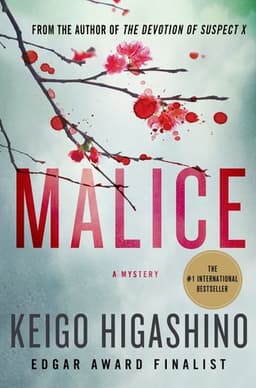
Malice (Detective Kaga, #1)
Keigo Higashino
Acclaimed bestselling novelist Kunihiko Hidaka is found brutally murdered in his home on the night before he's planning to leave Japan and relocate to Vancouver. His body is found in his office, a locked room, within his locked house, by his wife and his best friend, both of whom have rock solid alibis. Or so it seems.At the crime scene, Police Detective Kyochiro Kaga recognizes Hidaka's best friend, Osamu Nonoguchi. Years ago when they were both teachers, they were colleagues at the same public school. Kaga went on to join the police force while Nonoguchi eventually left to become a full-time writer, though with not nearly the success of his friend Hidaka.As Kaga investigates, he eventually uncovers evidence that indicates that the two writers' relationship was very different that they claimed, that they were anything but best friends. But the question before Kaga isn't necessarily who, or how, but why. In a brilliantly realized tale of cat and mouse, the detective and the killer battle over the truth of the past and how events that led to the murder really unfolded. And if Kaga isn't able to uncover and prove why the murder was committed, then the truth may never come out.Malice is one of the bestselling―the most acclaimed―novel in Keigo Higashino's series featuring police detective Kyochiro Kaga, one of the most popular creations of the bestselling novelist in Asia.
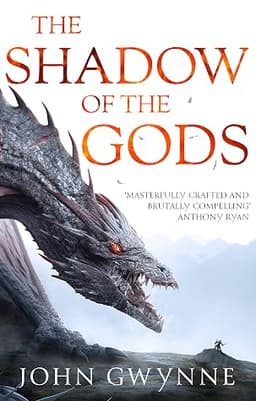
The Shadow of the Gods (The Bloodsworn Saga, #1)
John Gwynne
Set in a brand-new, Norse-inspired world, and packed with myth, magic and bloody vengeance, The Shadow of the Gods begins an epic new fantasy saga from bestselling author John Gwynne.After the gods warred and drove themselves to extinction, the cataclysm of their fall shattered the land of Vigrið.Now a new world is rising, where power-hungry jarls feud and monsters stalk the woods and mountains. A world where the bones of the dead gods still hold great power for those brave - or desperate - enough to seek them out.Now, as whispers of war echo across the mountains and fjords, fate follows in the footsteps of three people: a huntress on a dangerous quest, a noblewoman who has rejected privilege in pursuit of battle fame, and a thrall who seeks vengeance among the famed mercenaries known as the Bloodsworn.All three will shape the fate of the world as it once more falls under the shadow of the gods . . .
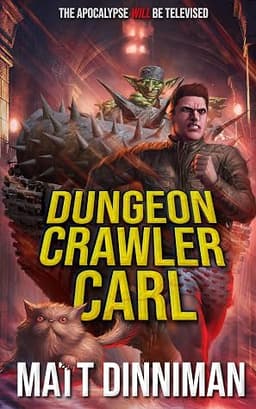
Dungeon Crawler Carl (Dungeon Crawler Carl, #1)
Matt Dinniman
Alternate cover edition of ASIN B08BKGYQXWThe apocalypse will be televised!A man. His ex-girlfriend's cat. A sadistic game show unlike anything in the universe: a dungeon crawl where survival depends on killing your prey in the most entertaining way possible.In a flash, every human-erected construction on Earth—from Buckingham Palace to the tiniest of sheds—collapses in a heap, sinking into the ground.The buildings and all the people inside have all been atomized and transformed into the dungeon: an 18-level labyrinth filled with traps, monsters, and loot. A dungeon so enormous, it circles the entire globe.Only a few dare venture inside. But once you're in, you can't get out. And what's worse, each level has a time limit. You have but days to find a staircase to the next level down, or it's game over. In this game, it's not about your strength or your dexterity. It's about your followers, your views. Your clout. It's about building an audience and killing those goblins with style.You can't just survive here. You gotta survive big.You gotta fight with vigor, with excitement. You gotta make them stand up and cheer. And if you do have that "it" factor, you may just find yourself with a following. That's the only way to truly survive in this game—with the help of the loot boxes dropped upon you by the generous benefactors watching from across the galaxy.They call it Dungeon Crawler World. But for Carl, it's anything but a game.
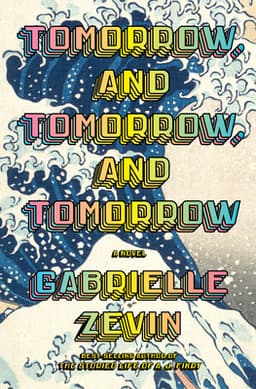
Tomorrow, and Tomorrow, and Tomorrow
Gabrielle Zevin
In this exhilarating novel, two friends—often in love, but never lovers—come together as creative partners in the world of video game design, where success brings them fame, joy, tragedy, duplicity, and, ultimately, a kind of immortality.On a bitter-cold day, in the December of his junior year at Harvard, Sam Masur exits a subway car and sees, amid the hordes of people waiting on the platform, Sadie Green. He calls her name. For a moment, she pretends she hasn't heard him, but then, she turns, and a game begins: a legendary collaboration that will launch them to stardom. These friends, intimates since childhood, borrow money, beg favors, and, before even graduating college, they have created their first blockbuster, Ichigo. Overnight, the world is theirs. Not even twenty-five years old, Sam and Sadie are brilliant, successful, and rich, but these qualities won't protect them from their own creative ambitions or the betrayals of their hearts.Spanning thirty years, from Cambridge, Massachusetts, to Venice Beach, California, and lands in between and far beyond, Gabrielle Zevin's Tomorrow, and Tomorrow, and Tomorrow is a dazzling and intricately imagined novel that examines the multifarious nature of identity, disability, failure, the redemptive possibilities in play, and above all, our need to connect: to be loved and to love. Yes, it is a love story, but it is not one you have read before.
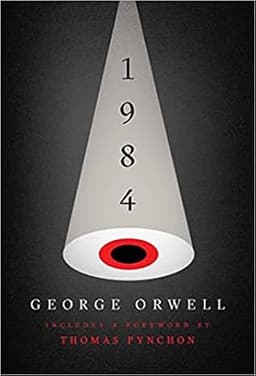
1984
George Orwell
A masterpiece of rebellion and imprisonment where war is peace freedom is slavery and Big Brother is watching. Thought Police, Big Brother, Orwellian - these words have entered our vocabulary because of George Orwell's classic dystopian novel 1984. The story of one man's Nightmare Odyssey as he pursues a forbidden love affair through a world ruled by warring states and a power structure that controls not only information but also individual thought and memory 1984 is a prophetic haunting tale More relevant than ever before 1984 exposes the worst crimes imaginable the destruction of truth freedom and individuality. With a foreword by Thomas Pynchon. This beautiful paperback edition features deckled edges and french flaps a perfect gift for any occasionAlternate cover edition can be found here.

Siddhartha
Hermann Hesse
Herman Hesse's classic novel has delighted, inspired, and influenced generations of readers, writers, and thinkers. In this story of a wealthy Indian Brahmin who casts off a life of privilege to seek spiritual fulfillment. Hesse synthesizes disparate philosophies--Eastern religions, Jungian archetypes, Western individualism--into a unique vision of life as expressed through one man's search for true meaning.
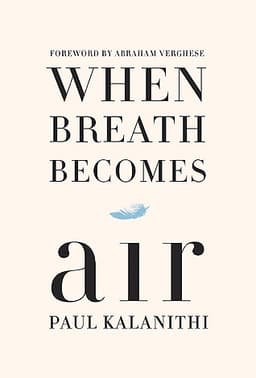
When Breath Becomes Air
Paul Kalanithi
#1 NEW YORK TIMES BESTSELLER • PULITZER PRIZE FINALIST • OVER TWO MILLION COPIES SOLDThis inspiring, exquisitely observed memoir finds hope and beauty in the face of insurmountable odds as an idealistic young neurosurgeon attempts to answer the question, What makes a life worth living?“Unmissable . . . Finishing this book and then forgetting about it is simply not an option.”—Janet Maslin, The New York TimesONE OF THE BEST BOOKS OF THE YEAR: The New York Times Book Review, People, NPR, The Washington Post, Slate, Harper’s Bazaar, Time Out New York, Publishers Weekly, BookPageAn Oprah Daily Best Nonfiction Book of the Past Two Decades • A Kirkus Reviews Best Nonfiction Book of the CenturyAt the age of thirty-six, on the verge of completing a decade’s worth of training as a neurosurgeon, Paul Kalanithi was diagnosed with stage IV lung cancer. One day he was a doctor treating the dying, and the next he was a patient struggling to live. And just like that, the future he and his wife had imagined evaporated. When Breath Becomes Air chronicles Kalanithi’s transformation from a naïve medical student “possessed,” as he wrote, “by the question of what, given that all organisms die, makes a virtuous and meaningful life” into a neurosurgeon at Stanford working in the brain, the most critical place for human identity, and finally into a patient and new father confronting his own mortality.What makes life worth living in the face of death? What do you do when the future, no longer a ladder toward your goals in life, flattens out into a perpetual present? What does it mean to have a child, to nurture a new life as another fades away? These are some of the questions Kalanithi wrestles with in this profoundly moving, exquisitely observed memoir.Paul Kalanithi died in March 2015, while working on this book, yet his words live on as a guide and a gift to us all. “I began to realize that coming face to face with my own mortality, in a sense, had changed nothing and everything,” he wrote. “Seven words from Samuel Beckett began to repeat in my head: ‘I can’t go on. I’ll go on.’” When Breath Becomes Air is an unforgettable, life-affirming reflection on the challenge of facing death and on the relationship between doctor and patient, from a brilliant writer who became both.Finalist for the PEN Center USA Literary Award in Creative Nonfiction and the Books for a Better Life Award in Inspirational Memoir
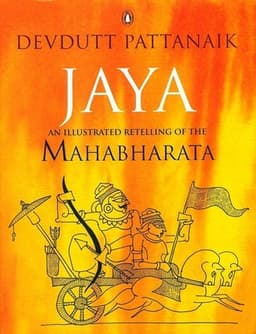
Jaya: 9
Devdutt Pattanaik
High above the sky stands Swarga, paradise, abode of the gods. Still above is Vaikuntha, heaven, abode of God.The doorkeepers of Vaikuntha are the twins, Jaya and Vijaya, both whose names mean 'victory'. One keeps you in Swarga; the other raises you into Vaikuntha.In Vaikuntha there is bliss forever, in Swarga there is pleasure for only as long as you deserve. What is the difference between Jaya and Vijaya? Solve this puzzle and you will solve the mystery of the Mahabharata.In this enthralling retelling of India's greatest epic, the Mahabharata originally known as Jaya, Devdutt Pattanaik seamlessly weaves into a single narrative plots from the Sanskrit classic as well as its many folk and regional variants, including the Pandavani of Chhattisgarh, Gondhal of Maharashtra, Terukkuttu of Tamil Nadu and Yakshagana of Karnataka.Richly illustrated with over 250 line drawings by the author, the 108 chapters abound with little-known details such as the names of the hundred Kauravas, the worship of Draupadi as a goddess in Tamil Nadu, the stories of Astika, Madhavi, Jaimini, Aravan and Barbareek, the Mahabharata version of the Shakuntalam and the Ramayana, and the dating of the war based on astronomical data.With clarity and simplicity, the tales in this elegant volume reveal the eternal relevance of the Mahabharata, the complex and disturbing meditation on the human condition that has shaped Indian thought for over 3000 years.
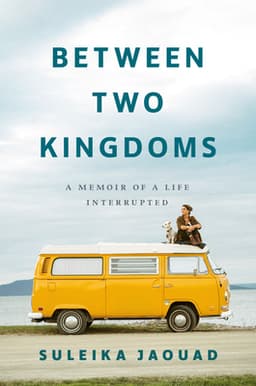
Between Two Kingdoms: A Memoir of a Life Interrupted
Suleika Jaouad
A searing, deeply moving memoir of illness and recovery that traces one young woman’s journey from diagnosis to remission and, ultimately, a road trip of healing and self-discovery.In the summer after graduating from college, Suleika Jaouad was preparing, as they say in commencement speeches, to enter "the real world". She had fallen in love and moved to Paris to pursue her dream of becoming a war correspondent. The real world she found, however, would take her into a very different kind of conflict zone.It started with an itch - first on her feet, then up her legs, like 1,000 invisible mosquito bites. Next came the exhaustion, and the six-hour naps that only deepened her fatigue. Then a trip to the doctor and, a few weeks shy of her 23rd birthday, a diagnosis: leukemia, with a 35 percent chance of survival. Just like that, the life she had imagined for herself had gone up in flames. By the time Jaouad flew home to New York, she had lost her job, her apartment, and her independence. She would spend much of the next four years in a hospital bed, fighting for her life and chronicling the saga in a column for The New York Times.When Jaouad finally walked out of the cancer ward - after three and a half years of chemo, a clinical trial, and a bone marrow transplant - she was, according to the doctors, cured. But as she would soon learn, a cure is not where the work of healing ends; it’s where it begins. She had spent the past 1,500 days in desperate pursuit of one goal - to survive. And now that she’d done so, she realized that she had no idea how to live.How would she reenter the world and live again? How could she reclaim what had been lost? Jaouad embarked - with her new best friend, Oscar, a scruffy terrier mutt - on a 100-day, 15,000-mile road trip across the country. She set out to meet some of the strangers who had written to her during her years in the hospital: a teenage girl in Florida also recovering from cancer; a teacher in California grieving the death of her son; a death-row inmate in Texas who’d spent his own years confined to a room. What she learned on this trip is that the divide between sick and well is porous, that the vast majority of us will travel back and forth between these realms throughout our lives. Between Two Kingdoms is a profound chronicle of survivorship and a fierce, tender, and inspiring exploration of what it means to begin again.
The Message
Ta-Nehisi Coates
Ta-Nehisi Coates originally set off to write a book about writing, in the tradition of Orwell’s classic Politics and the English Language, but found himself grappling with deeper questions about how our stories—our reporting and imaginative narratives and mythmaking—expose and distort our realities. The first of the book’s three intertwining essays is set in Dakar, Senegal. Despite being raised as a strict Afrocentrist, Coates had never set foot on the African continent until now. He roams the “steampunk” city of “old traditions and new machinery,” but everywhere he goes he feels as if he’s in two places at once: a modern city in Senegal and a mythic kingdom in his mind. Finally he travels to the slave castles off the coast and has his own reckoning with the legacy of the Afrocentric dream.He takes readers along with him to Columbia, South Carolina, where he meets an educator whose job is threatened for teaching one of Coates’s own books. There he discovers a community of mostly white supporters who were transformed by the “racial reckoning” of 2020. But he also explores the backlash to this reckoning and the deeper myths of the community—a capital of the confederacy with statues of segregationists looming over its public squares.And in Palestine, Coates discovers the devastating gap between the narratives we’ve accepted and the clashing reality of life on the ground. He meets with activists and dissidents, Israelis and Palestinians—the old, who remember their dispossessions on two continents, and the young, who have only known struggle and disillusionment. He travels into Jerusalem, the heart of Zionist mythology, and to the occupied territories, where he sees the reality the myth is meant to hide. It is this hidden story that draws him in and profoundly changes him—and makes the war that would soon come all the more devastating.Written at a dramatic moment in American and global life, this work from one of the country’s most important writers is about the urgent need to untangle ourselves from the destructive nationalist myths that shape our world—and our own souls—and embrace the liberating power of even the most difficult truths.
The Sirens' Call: How Attention Became the World's Most Endangered Resource
Christopher L. Hayes
An Instant #1 New York Times BestsellerFrom the New York Times bestselling author and MSNBC and podcast host, a powerful wide-angle reckoning with how the assault from attention capitalism on our minds and our hearts has reordered our politics and the very fabric of our society“An ambitious analysis of how the trivial amusements offered by online life have degraded not only our selves but also our politics.” —New York Times“Brilliant book… Reading it has made me change the way I work and think.”—Rachel MaddowWe all feel it—the distraction, the loss of focus, the addictive focus on the wrong things for too long. We bump into the zombies on their phones in the street, and sometimes they’re us. We stare in pity at the four people at the table in the restaurant, all on their phones, and then we feel the buzz in our pocket. Something has changed for most of human history, the boundary between public and private has been clear, at least in theory. Now, as Chris Hayes writes, “With the help of a few tech firms, we basically tore it down in about a decade.” Hayes argues that we are in the midst of an epoch-defining transition whose only parallel is what happened to labor in the nineteenth attention has become a commodified resource extracted from us, and from which we are increasingly alienated. The Sirens’ Call is the big-picture vision we urgently need to offer clarity and guidance.Because there is a breaking point. Sirens are designed to compel us, and now they are going off in our bedrooms and kitchens at all hours of the day and night, doing the bidding of vast empires, the most valuable companies in history, built on harvesting human attention. As Hayes writes, “Now our deepest neurological structures, human evolutionary inheritances, and social impulses are in a habitat designed to prey upon, to cultivate, distort, or destroy that which most fundamentally makes us human.” The Sirens’ Call is the book that snaps everything into a single holistic framework so that we can wrest back control of our lives, our politics, and our future.
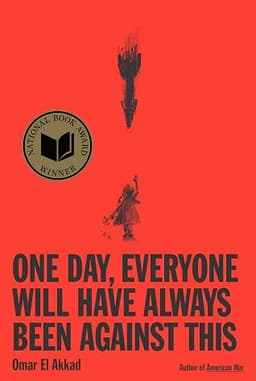
One Day, Everyone Will Have Always Been Against This
Omar El Akkad
From award-winning novelist and journalist Omar El Akkad comes a powerful reckoning with what it means to live in the heart of an Empire which doesn’t consider you fully human.On Oct 25th, after just three weeks of the bombardment of Gaza, Omar El Akkad put out a tweet: “One day, when it’s safe, when there’s no personal downside to calling a thing what it is, when it’s too late to hold anyone accountable, everyone will have always been against this.” This tweet was viewed over 10 million times. One Day Everyone Will Have Always Been Against This chronicles the deep fracture which has occurred for Black, brown, indigenous Americans, as well as the upcoming generation, many of whom had clung to a thread of faith in western ideals, in the idea that their countries, or the countries of their adoption, actually attempted to live up to the values they espouse. This book is a reckoning with what it means to live in the west, and what it means to live in a world run by a small group of countries—America, the UK, France and Germany. It will be The Fire Next Time for a generation that understands we’re undergoing a shift in the so-called ‘rules-based order,’ a generation that understands the west can no longer be trusted to police and guide the world, or its own cities and campuses. It draws on intimate details of Omar’s own story as an emigrant who grew up believing in the western project, who was catapulted into journalism by the rupture of 9/11. This book is his heartsick breakup letter with the west. It is a breakup we are watching all over the U.S., on college campuses, on city streets, and the consequences of this rupture will be felt by all of us. His book is for all the people who want something better than what the west has served up. This is the book for our time.
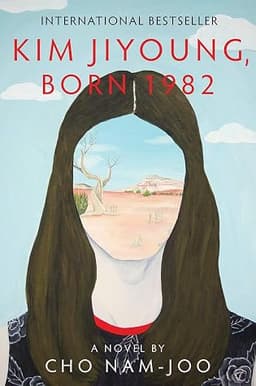
Kim Jiyoung, Born 1982
Cho Nam-Joo
A fierce international bestseller that launched Korea’s new feminist movement, Kim Jiyoung, Born 1982 follows one woman’s psychic deterioration in the face of rigid misogyny.Truly, flawlessly, completely, she became that person.In a small, tidy apartment on the outskirts of the frenzied metropolis of Seoul lives Kim Jiyoung. A thirtysomething-year-old “millennial everywoman,” she has recently left her white-collar desk job—in order to care for her newborn daughter full-time—as so many Korean women are expected to do. But she quickly begins to exhibit strange symptoms that alarm her husband, parents, and in-laws: Jiyoung impersonates the voices of other women—alive and even dead, both known and unknown to her. As she plunges deeper into this psychosis, her discomfited husband sends her to a male psychiatrist.In a chilling, eerily truncated third-person voice, Jiyoung’s entire life is recounted to the psychiatrist—a narrative infused with disparate elements of frustration, perseverance, and submission. Born in 1982 and given the most common name for Korean baby girls, Jiyoung quickly becomes the unfavored sister to her princeling little brother. Always, her behavior is policed by the male figures around her—from the elementary school teachers who enforce strict uniforms for girls, to the coworkers who install a hidden camera in the women’s restroom and post their photos online. In her father’s eyes, it is Jiyoung’s fault that men harass her late at night; in her husband’s eyes, it is Jiyoung’s duty to forsake her career to take care of him and their child—to put them first.Jiyoung’s painfully common life is juxtaposed against a backdrop of an advancing Korea, as it abandons “family planning” birth control policies and passes new legislation against gender discrimination. But can her doctor flawlessly, completely cure her, or even discover what truly ails her?Rendered in minimalist yet lacerating prose, Kim Jiyoung, Born 1982 sits at the center of our global #MeToo movement and announces the arrival of writer of international significance
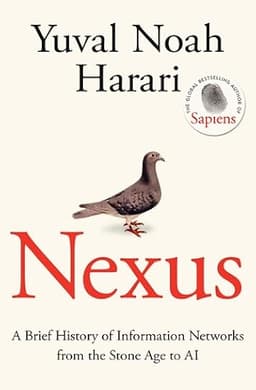
Nexus: A Brief History of Information Networks from the Stone Age to AI
Yuval Noah Harari
From the author of Sapiens comes the groundbreaking story of how information networks have made, and unmade, our world.For the last 100,000 years, we Sapiens have accumulated enormous power. But despite all our discoveries, inventions, and conquests, we now find ourselves in an existential crisis. The world is on the verge of ecological collapse. Misinformation abounds. And we are rushing headlong into the age of AI—a new information network that threatens to annihilate us. For all that we have accomplished, why are we so self-destructive?Nexus looks through the long lens of human history to consider how the flow of information has shaped us, and our world. Taking us from the Stone Age, through the canonization of the Bible, early modern witch-hunts, Stalinism, Nazism, and the resurgence of populism today, Yuval Noah Harari asks us to consider the complex relationship between information and truth, bureaucracy and mythology, wisdom and power. He explores how different societies and political systems throughout history have wielded information to achieve their goals, for good and ill. And he addresses the urgent choices we face as non-human intelligence threatens our very existence. Information is not the raw material of truth; neither is it a mere weapon. Nexus explores the hopeful middle ground between these extremes, and in doing so, rediscovers our shared humanity.
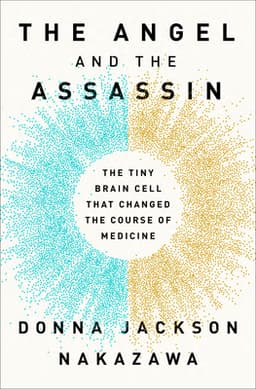
The Angel and the Assassin: The Tiny Brain Cell That Changed the Course of Medicine
Donna Jackson Nakazawa
A thrilling story of scientific detective work and medical potential that illuminates the newly understood role of microglia--an elusive type of brain cell that is vitally relevant to our everyday lives."The rarest of books: a combination of page-turning discovery and remarkably readable science journalism."--Mark Hyman, MD, #1 New York Times bestselling author of Food: What the Heck Should I Eat?Until recently, microglia were thought to be merely the brain's housekeepers, helpfully removing damaged cells. But a recent groundbreaking discovery revealed them to be capable of terrifying Jekyll and Hyde behavior. When triggered--and anything that stirs up the immune system in the body can activate microglia--they can morph into destroyers, impacting a wide range of issues from memory problems and anxiety to depression and Alzheimer's. Under the right circumstances, however, microglia can be coaxed back into being angelic healers, able to repair the brain in ways that help alleviate symptoms and hold the promise to one day prevent disease.A fascinating behind-the-scenes account of this cutting-edge science, The Angel and the Assassin also explores the medical implications of these game-changing discoveries. Award-winning journalist Donna Jackson Nakazawa began her investigation with a personal interest--when diagnosed with an autoimmune disorder years ago, she was convinced there was something physical going on in her brain as well as her body, though no doctor she consulted could explain how the two could be interacting in this way. With the compassion born of her own experience, she follows practitioners and patients on the front lines of treatments that help to "reboot" microglia--from neurofeedback and intermittent fasting to transcranial magnetic stimulation and gamma light flicker therapy. She witnesses patients finding significant relief from pressing symptoms--and at least one stunning recovery--offering new hope to the tens of millions who suffer from mental, cognitive, and physical health issues.Proving once and for all the biological basis for the mind-body connection, the discovery of the true role of microglia stands to rewrite psychiatric and medical texts as we know them. Hailed as "riveting," "stunning," and "visionary," The Angel and the Assassin offers us a radically reconceived picture of human health and promises to change everything we thought we knew about how to heal ourselves.
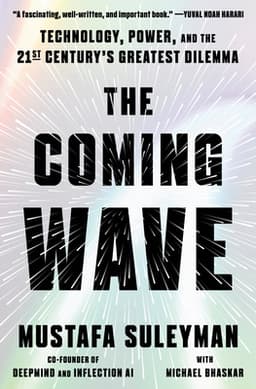
The Coming Wave: Technology, Power, and the Twenty-first Century's Greatest Dilemma
Mustafa Suleyman
Künstliche Intelligenz ist die Coming Wave, der nächste technologische Sprung, der sich nicht aufhalten lässt.Wir nähern uns einem kritischen Punkt in der Menschheitsgeschichte. Die Künstliche Intelligenz steht noch am Anfang, doch die Welle baut sich auf, und wir sind darauf nicht vorbereitet. Mustafa Suleyman ist Mitbegründer von DeepMind, dem KI-Pionier, der nun Teil von Alphabet ist, dem Google-Mutterkonzern. Er ist der ultimative KI-Insider. Sein Buch zeigt, was auf dem Spiel steht, und fragt, wie wir von den neuen Technologien profitieren können, ohne die Kontrolle zu verlieren.Bald werden wir in unserem täglichen Leben von KI umgeben sein. Sie wird unseren Alltag organisieren, unsere Geschäftswelt und sogar Kernaufgaben der Staatsverwaltung übernehmen. Wir brauchen die KI, um die Herausforderungen zu meistern, vor denen wir stehen, etwa den Klimawandel. Gleichzeitig birgt die Technologie Gefahren, die von keiner vorherigen Fortschrittswelle ausgingen, bis hin zur Auflösung von Staaten und einer Verdrängung des Menschen. Was macht man mit einer Welle, die auf den Strand zurast und sich nicht aufhalten lässt? Man versucht sie zu kanalisieren. Genau das ist das Anliegen dieses Den schmalen Grad zu finden, auf dem wir die Früchte der Technologie ernten ohne ihr zum Opfer zu fallen. Das ist die zentrale Aufgabe unserer Zeit.
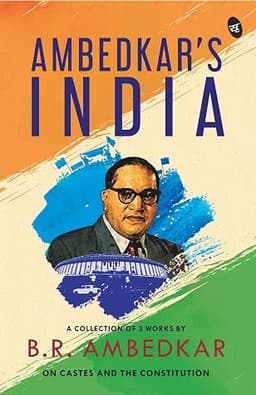
AMBEDKAR'S INDIA
B.R. Ambedkar
Ambedkar's India is a collection of three of B.R. Ambedkar's most prominent speeches on caste and the Indian Constitution. "In the fight for Swaraj, you fight with the whole nation on your side. In fighting caste system, you stand against the whole nation—and that too, your own." Annihilation of Caste is one of Ambedkar's best works in putting together how caste as a system has been eating up the roots of a rich cultural melting pot like India. "Bhakti in religion could lead to salvation. But in politics, Bhakti is a sure road to eventual dictatorship." The Grammar of Anarchy reflects Ambedkar's ideas on how we need to pave the way for Independent India. It reflects his deep love and aspirations for India and its people. "...the sub-divisions [of caste] have lost the open-door character of the class system, and have become self-enclosed units called castes." Castes in India: Their Mechanism, Genesis and Development is an in-depth study of how classes went on to become castes and sub-castes to dot the Indian social system. This powerful narrative is a radical eye-opener.
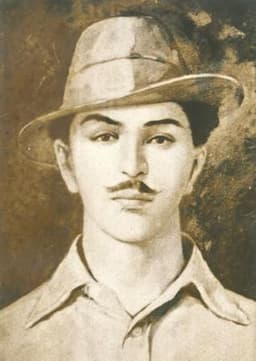
Why I Am An Atheist: An Autobiographical Discourse
Bhagat Singh
Autobiography of an Indian revolutionary and freedom fighter.
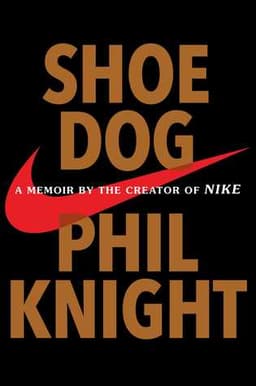
Shoe Dog: A Memoir by the Creator of Nike
Phil Knight
In this candid and riveting memoir, for the first time ever, Nike founder and CEO Phil Knight shares the inside story of the company’s early days as an intrepid start-up and its evolution into one of the world’s most iconic, game-changing, and profitable brands.In 1962, fresh out of business school, Phil Knight borrowed $50 from his father and created a company with a simple mission: import high-quality, low-cost athletic shoes from Japan. Selling the shoes from the trunk of his lime green Plymouth Valiant, Knight grossed $8,000 his first year. Today, Nike’s annual sales top $30 billion. In an age of startups, Nike is the ne plus ultra of all startups, and the swoosh has become a revolutionary, globe-spanning icon, one of the most ubiquitous and recognizable symbols in the world today.But Knight, the man behind the swoosh, has always remained a mystery. Now, for the first time, in a memoir that is candid, humble, gutsy, and wry, he tells his story, beginning with his crossroads moment. At 24, after backpacking around the world, he decided to take the unconventional path, to start his own business—a business that would be dynamic, different.Knight details the many risks and daunting setbacks that stood between him and his dream—along with his early triumphs. Above all, he recalls the formative relationships with his first partners and employees, a ragtag group of misfits and seekers who became a tight-knit band of brothers. Together, harnessing the transcendent power of a shared mission, and a deep belief in the spirit of sport, they built a brand that changed everything.
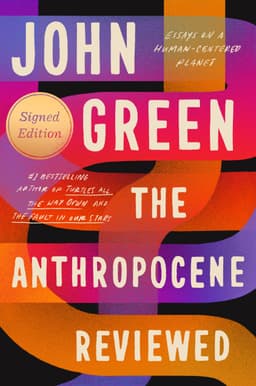
The Anthropocene Reviewed: Essays on a Human-Centered Planet
John Green
A deeply moving and mind-expanding collection of personal essays in the first ever work of non-fiction from #1 internationally bestselling author John GreenThe Anthropocene is the current geological age, in which human activity has profoundly shaped the planet and its biodiversity. In this remarkable symphony of essays adapted and expanded from his ground-breaking, critically acclaimed podcast, John Green reviews different facets of the human-centered planet - from the QWERTY keyboard and Halley's Comet to Penguins of Madagascar - on a five-star scale.Complex and rich with detail, the Anthropocene's reviews have been praised as 'observations that double as exercises in memoiristic empathy', with over 10 million lifetime downloads. John Green's gift for storytelling shines throughout this artfully curated collection about the shared human experience; it includes beloved essays along with six all-new pieces exclusive to the book.
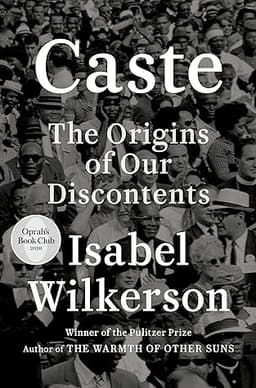
Caste: The Origins of Our Discontents
Isabel Wilkerson
The Pulitzer Prize–winning, bestselling author of The Warmth of Other Suns examines the unspoken caste system that has shaped America and shows how our lives today are still defined by a hierarchy of human divisions.“As we go about our daily lives, caste is the wordless usher in a darkened theater, flashlight cast down in the aisles, guiding us to our assigned seats for a performance. The hierarchy of caste is not about feelings or morality. It is about power—which groups have it and which do not.”In this brilliant book, Isabel Wilkerson gives us a masterful portrait of an unseen phenomenon in America as she explores, through an immersive, deeply researched narrative and stories about real people, how America today and throughout its history has been shaped by a hidden caste system, a rigid hierarchy of human rankings.Beyond race, class, or other factors, there is a powerful caste system that influences people’s lives and behavior and the nation’s fate. Linking the caste systems of America, India, and Nazi Germany, Wilkerson explores eight pillars that underlie caste systems across civilizations, including divine will, bloodlines, stigma, and more. Using riveting stories about people—including Martin Luther King, Jr., baseball’s Satchel Paige, a single father and his toddler son, Wilkerson herself, and many others—she shows the ways that the insidious undertow of caste is experienced every day. She documents how the Nazis studied the racial systems in America to plan their out-cast of the Jews; she discusses why the cruel logic of caste requires that there be a bottom rung for those in the middle to measure themselves against; she writes about the surprising health costs of caste, in depression and life expectancy, and the effects of this hierarchy on our culture and politics. Finally, she points forward to ways America can move beyond the artificial and destructive separations of human divisions, toward hope in our common humanity.
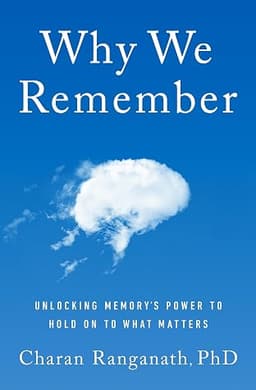
Why We Remember: Unlocking Memory's Power to Hold on to What Matters
Charan Ranganath
Паметта е нещо много повече от запис на миналото.В това иновативно пътуване през дебрите на ума и мозъка един от водещите експерти по въпросите на паметта Чаран Ранганат посочва мощната роля, която паметта играе в почти всеки аспект от живота ни – от запомнянето на имена и лица до ученето, вземането на решения, травмите и лекуването им.Вълнуващ поглед върху начина, по който функционира паметта... Ранганат притежава умението да описва невроанатомията увлекателно и разбираемо, а науката има свойството постоянно да изненадва...Достъпна и поучителна, книгата заслужава да бъде прочетена.Пъблишърс Уикли„Защо помним“ е очарователен, поетичен и същевременно практичен поглед към сферата на паметта. И няма по-добър от Ранганат, който да поведе читателите на пътешествие през този изумителен вътрешен пейзаж.Дейвид Игълман, автор на „Инкогнито“„Защо помним“ предлага радикално ново и оригинално обяснение на начина, по който си спомняме. Д-р Ранганат показва, че паметта е повече от обикновен запис на миналото, а спомените са тясно свързани с настоящето и начин за предвиждане на бъдещето.Матю Уокър, автор на „Защо спим“
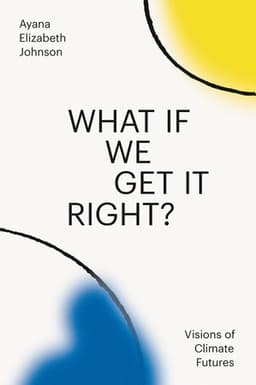
What If We Get It Right?: Visions of Climate Futures
Ayana Elizabeth Johnson
Our climate future is not yet written.What if we act as if we love the future?Sometimes the bravest thing we can do while facing an existential crisis is imagine life on the other side. This provocative and joyous book maps an inspiring landscape of possible climate futures.Through clear-eyed essays and vibrant conversations, infused with data, poetry, and art, Ayana Elizabeth Johnson guides us through solutions and possibilities at the nexus of science, policy, culture, and justice. Visionary farmers and financers, architects and advocates help us conjure a flourishing future, one worth the effort it will take—from all of us, with whatever we have to offer—to create.If you haven’t yet been able to picture a transformed and replenished world—or see yourself, your loved ones, and your community in it— this book is for you. If you haven’t yet found your role in shaping this new world, or you’re not sure how we can actually get there, this book is for you.With grace, humor, and humanity, Ayana invites readers to ask and answer this ultimate question, What if we get it right?On imagination, possibility, and transformation withPaola AntonelliXiye Bastida & Ayisha SiddiqaJade BegayRégine ClémentAbigail DillenBrian DonahueKelly Sims GallagherRhiana Gunn-WrightCorley KennaBryan C. Lee Jr. & Kate OrffFranklin Leonard & Adam McKayBill McKibbenKate MarvelSamantha MontanoLeah PennimanColette Pichon BattleKendra Pierre-LouisJudith D. SchwartzJigar ShahBren SmithOana StanescuMustafa Suleyman
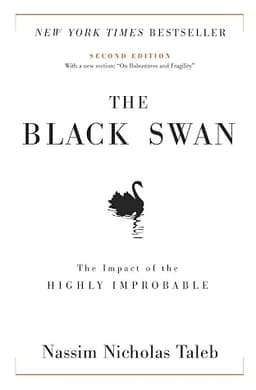
The Black Swan: The Impact of the Highly Improbable
Nassim Nicholas Taleb
The most influential book of the past seventy-five years: a groundbreaking exploration of everything we know about what we don’t know, now with a new section called “On Robustness and Fragility.”A black swan is a highly improbable event with three principal characteristics: It is unpredictable; it carries a massive impact; and, after the fact, we concoct an explanation that makes it appear less random, and more predictable, than it was. The astonishing success of Google was a black swan; so was 9/11. For Nassim Nicholas Taleb, black swans underlie almost everything about our world, from the rise of religions to events in our own personal lives. Why do we not acknowledge the phenomenon of black swans until after they occur? Part of the answer, according to Taleb, is that humans are hardwired to learn specifics when they should be focused on generalities. We concentrate on things we already know and time and time again fail to take into consideration what we don’t know. We are, therefore, unable to truly estimate opportunities, too vulnerable to the impulse to simplify, narrate, and categorize, and not open enough to rewarding those who can imagine the “impossible.” For years, Taleb has studied how we fool ourselves into thinking we know more than we actually do. We restrict our thinking to the irrelevant and inconsequential, while large events continue to surprise us and shape our world. In this revelatory book, Taleb will change the way you look at the world, and this second edition features a new philosophical and empirical essay, “On Robustness and Fragility,” which offers tools to navigate and exploit a Black Swan world.Taleb is a vastly entertaining writer, with wit, irreverence, and unusual stories to tell. He has a polymathic command of subjects ranging from cognitive science to business to probability theory. Elegant, startling, and universal in its applications, The Black Swan is a landmark book—itself a black swan.
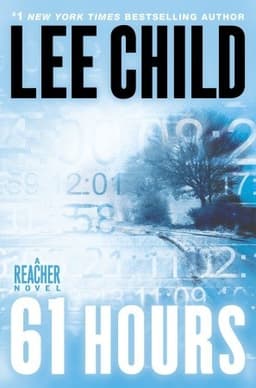
61 Hours (Jack Reacher, #14)
Lee Child
Jack Reacher is back. The countdown has begun. Get ready for the most exciting 61 hours of your life. #1 New York Times bestselling author Lee Child’s latest thriller is a ticking time bomb of suspense that builds electric tension on every page. Sixty-one hours. Not a minute to spare.A tour bus crashes in a savage snowstorm and lands Jack Reacher in the middle of a deadly confrontation. In nearby Bolton, South Dakota, one brave woman is standing up for justice in a small town threatened by sinister forces. If she’s going to live long enough to testify, she’ll need help. Because a killer is coming to Bolton, a coldly proficient assassin who never misses.Reacher’s original plan was to keep on moving. But the next 61 hours will change everything. The secrets are deadlier and his enemies are stronger than he could have guessed—but so is the woman whose life he’ll risk his own to save. In 61 Hours , Lee Child has written a showdown thriller with an explosive ending that readers will talk about for a long time to come.
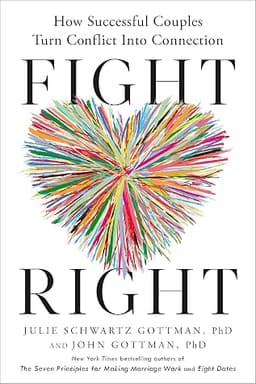
Fight Right: How Successful Couples Turn Conflict Into Connection
Julie Schwartz Gottman
LEARN THE 5 SECRETS OF SUCCESSFUL COUPLESConflict is the top reason couples seek help—but it's also an opportunity for greater intimacy, deeper connection, and lasting love according to this essential guide from the world's leading relationship scientists and bestselling authors of The Seven Principles for Making Marriage Work and Eight Dates.How we fight predicts the future of our relationships. Most of us blunder into conflict without knowing what we are really fighting about and then quickly become overwhelmed by physiological responses we can’t control and emotions we don’t anticipate. The truth is the happiest and most successful couples fight—all the time. Conflict is human, and necessary.Through decades of research, Drs. John and Julie Gottman, founders of the world-famous Love Lab, have identified the five common mistakes we make when we are at odds. In Fight Right, we learn the five secrets that help us to get back on track and harness conflict to build stronger, healthier relationships. With kindness, clarity, and a deep understanding of the struggles couples are going through, the Gottmans show us that we each have a unique conflict culture, borne of how we were raised and how we experienced past relationships, and they take us through all the possible combinations, from Avoiders, to Validators, to Volatiles, and how they can best work together.Fight Right is an essential resource that will help couples escape the win-or-lose mentality in favor of a collaborative approach: calming down, staying connected, and really understanding, so that our fights can bring us closer.
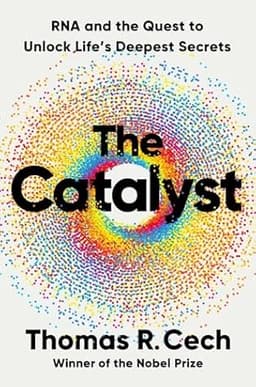
The Catalyst: RNA and the Quest to Unlock Life's Deepest Secrets
Thomas R. Cech
A Nobel Prize–winning scientist reveals biology’s most transformative achievements in decades―a Double Helix for the dawning of the RNA age. Over the last half century, a quiet revolution has taken place. In a series of breathtaking discoveries, biochemist Thomas Cech and a diverse cast of brilliant scientists have revealed RNA at the center of biology’s greatest mysteries, from how life began to what makes us human to why we age. At last, The Catalyst pulls back the curtain to show how RNA―long sidelined as the passive servant of DNA―defines life, from its very origins to our future in the twenty-first century. Recounting his own paradigm-shifting discovery that RNA can catalyze biochemical reactions, as well as his work on the “fountain of youth” telomerase, Cech unfolds how RNA holds the key to the intricate machinery of our cells, the critical processes of aging and disease, and the spectacular powers of breakthrough therapies from CRISPR to mRNA vaccines. From one of our foremost scientists, The Catalyst is a must-read guide to the present and future of biology and medicine. 26 illustrations
Skin in the Game: The Hidden Asymmetries in Daily Life
Nassim Nicholas Taleb
From the New York Times bestselling author of The Black Swan, a bold new work that challenges many of our long-held beliefs about risk and reward, politics and religion, finance and personal responsibility In his most provocative and practical book yet, one of the foremost thinkers of our time redefines what it means to understand the world, succeed in a profession, contribute to a fair and just society, detect nonsense, and influence others. Citing examples ranging from Hammurabi to Seneca, Antaeus the Giant to Donald Trump, Nassim Nicholas Taleb shows how the willingness to accept one’s own risks is an essential attribute of heroes, saints, and flourishing people in all walks of life. As always both accessible and iconoclastic, Taleb challenges long-held beliefs about the values of those who spearhead military interventions, make financial investments, and propagate religious faiths. Among his insights: • For social justice, focus on symmetry and risk sharing. You cannot make profits and transfer the risks to others, as bankers and large corporations do. You cannot get rich without owning your own risk and paying for your own losses. Forcing skin in the game corrects this asymmetry better than thousands of laws and regulations. • Ethical rules aren’t universal. You’re part of a group larger than you, but it’s still smaller than humanity in general. • Minorities, not majorities, run the world. The world is not run by consensus but by stubborn minorities imposing their tastes and ethics on others. • You can be an intellectual yet still be an idiot. “Educated philistines” have been wrong on everything from Stalinism to Iraq to low-carb diets. • Beware of complicated solutions (that someone was paid to find). A simple barbell can build muscle better than expensive new machines. • True religion is commitment, not just faith. How much you believe in something is manifested only by what you’re willing to risk for it.The phrase “skin in the game” is one we have often heard but rarely stopped to truly dissect. It is the backbone of risk management, but it’s also an astonishingly rich worldview that, as Taleb shows in this book, applies to all aspects of our lives. As Taleb says, “The symmetry of skin in the game is a simple rule that’s necessary for fairness and justice, and the ultimate BS-buster,” and “Never trust anyone who doesn’t have skin in the game. Without it, fools and crooks will benefit, and their mistakes will never come back to haunt them.”
Antifragile: Things That Gain from Disorder
Nassim Nicholas Taleb
From the bestselling author of The Black Swan and one of the foremost philosophers of our time, Nassim Nicholas Taleb, a book on how some systems actually benefit from disorder.In The Black Swan Taleb outlined a problem; in Antifragile he offers a definitive solution: how to gain from disorder and chaos while being protected from fragilities and adverse events. For what he calls the "antifragile" is one step beyond robust, as it benefits from adversity, uncertainty and stressors, just as human bones get stronger when subjected to stress and tension.Taleb stands uncertainty on its head, making it desirable, and proposing that things be built in an antifragile manner. Extremely ambitious and multidisciplinary, Antifragile provides a blueprint for how to behave—and thrive—in a world we don't understand and which is too uncertain for us to even try to understand. He who is not antifragile will perish. Why is the city state better than the nation state, why is debt bad for you, and why is almost everything modern bound to fail? The book covers innovation, health, biology, medicine, life decisions, politics, foreign policy, urban planning, war, personal finance, and economic systems. Throughout, the voice and recipes of the ancient wisdom from Phoenician, Roman, Greek, and Medieval sources are heard loud and clear.
Both Not Half: A Radical New Approach to Mixed Heritage Identity
Jassa Ahluwalia
'Full of warmth, humour, optimism and sometimes painful honesty' WILLIAM DALRYMPLE'Anyone who's ever struggled to make sense of who they are and where they belong should read this book' NADIA WHITTOME MP'An important voice of our generation' PARMINDER NAGRA 'This guy has better Punjabi than both of us and he's only half Punjabi.' Only. Half. I stared at those words. The intent behind the comment was in no way malicious, but it hurt. I felt diminished. I felt like I was being robbed of something essential to me. And as I stared at my screen, realisation dawned. '#bothnothalf' I replied. For over twenty-five years, actor Jassa Ahluwalia described himself as 'half Indian, half English'. His fluent Punjabi always prompted bewilderment, medical staff questioned the legitimacy of his name, and the world of casting taught him he wasn't 'the right kind of mixed-race'. Feeling caught between two worlds, it wasn't long before Jassa embarked on a call to we need to change how we think and talk about mixed identity.By delving into the media we grew up consuming and the legacies of empire we have been taught, Ahluwalia is there anything to be learnt from Rudyard Kipling? Why were movie stars urged to hide their mixed identities? To what extent did colonialism encourage or hinder mixed marriages? Is nationalism outdated? How can the politics of class and queer liberation inform our understanding of mixed identity?Both Not Half is a rallying cry for a new and inclusive future. It's a journey of self-discovery that unearths the historical roots of modern mixed identity as we know it, braving to deconstruct the binaries we have inherited and the narratives we passively accept. Part-memoir, this is a campaign for belonging in a divided world.
The Origin of Species
Charles Darwin
Darwin's theory of natural selection issued a profound challenge to orthodox thought and belief: no being or species has been specifically created; all are locked into a pitiless struggle for existence, with extinction looming for those not fitted for the task. Yet The Origin of Species (1859) is also a humane and inspirational vision of ecological interrelatedness, revealing the complex mutual interdependencies between animal and plant life, climate and physical environment, and—by implication—within the human world. Written for the general reader, in a style which combines the rigour of science with the subtlety of literature, The Origin of Species remains one of the founding documents of the modern age.
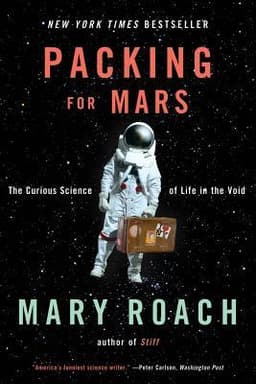
Packing for Mars: The Curious Science of Life in the Void
Mary Roach
“America’s funniest science writer” ( Washington Post ) explores the irresistibly strange universe of life without gravity in this New York Times bestseller. The best-selling author of Stiff and Bonk explores the irresistibly strange universe of space travel and life without gravity. From the Space Shuttle training toilet to a crash test of NASA’s new space capsule, Mary Roach takes us on the surreally entertaining trip into the science of life in space and space on Earth.
Being Mortal: Medicine and What Matters in the End
Atul Gawande
In Being Mortal, bestselling author Atul Gawande tackles the hardest challenge of his profession: how medicine can not only improve life but also the process of its endingMedicine has triumphed in modern times, transforming birth, injury, and infectious disease from harrowing to manageable. But in the inevitable condition of aging and death, the goals of medicine seem too frequently to run counter to the interest of the human spirit. Nursing homes, preoccupied with safety, pin patients into railed beds and wheelchairs. Hospitals isolate the dying, checking for vital signs long after the goals of cure have become moot. Doctors, committed to extending life, continue to carry out devastating procedures that in the end extend suffering.Gawande, a practicing surgeon, addresses his profession's ultimate limitation, arguing that quality of life is the desired goal for patients and families. Gawande offers examples of freer, more socially fulfilling models for assisting the infirm and dependent elderly, and he explores the varieties of hospice care to demonstrate that a person's last weeks or months may be rich and dignified.Full of eye-opening research and riveting storytelling, Being Mortal asserts that medicine can comfort and enhance our experience even to the end, providing not only a good life but also a good end.
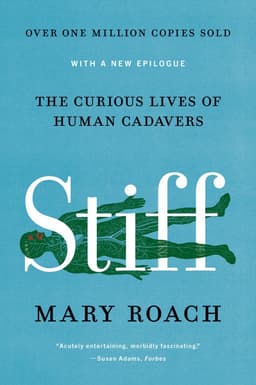
Stiff: The Curious Lives of Human Cadavers
Mary Roach
Beloved, best-selling science writer Mary Roach’s classic, now with a new epilogue. For two thousand years, cadavers—some willingly, some unwittingly—have been involved in science’s boldest strides and weirdest undertakings. They’ve tested France’s first guillotines, ridden the NASA Space Shuttle, been crucified in a Parisian laboratory to test the authenticity of the Shroud of Turin, and helped solve the mystery of TWA Flight 800. For every new surgical procedure, from heart transplants to gender confirmation surgery, cadavers have helped make history in their quiet way. Stiff investigates the strange lives of our bodies postmortem and answers the question: What should we do after we die?
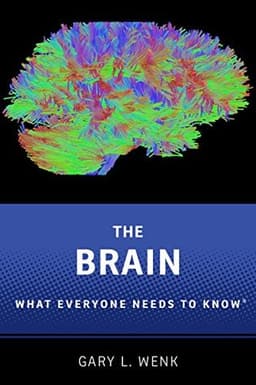
The Brain: What Everyone Needs To Know®
Gary L. Wenk
What is the principle purpose of a brain? A simple question, but the answer has taken millennia for us to begin to understand. So critical for our everyday existence, the brain still remains somewhat of a mystery. Gary L. Wenk takes us on a tour of what we do know about this enigmatic organ, showing us how the workings of the human brain produce our thoughts, feelings, and fears, and answering questions such How did humans evolve such a big brain? What is an emotion and why do we have them? What is a memory and why do we forget so easily? How does your diet affect how you think and feel? What happens when your brain gets old? Throughout human history, ignorance about the brain has caused numerous non-scientific, sometimes harmful interventions to be devised based on interpretations of scientific facts that were misguided. Wenk discusses why these neuroscientific myths are so popular, and why some of the interventions based on them are a waste of time and money. With illuminating insights, gentle humor, and welcome simplicity, The What Everyone Needs to Know? makes the complex biology of our brains accessible to the general reader.
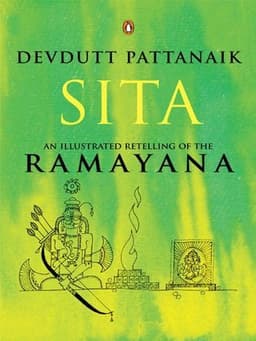
Sita: An Illustrated Retelling of the Ramayana
Devdutt Pattanaik
SITA : AN ILLUSTRATED RETELLING OF THE RAMAYANAIt is significant that the only character in Hindu mythology, a king at that, to be given the title of ekam-patni-vrata, devoted to a single wife, is associated with the most unjust act of abandoning her in the forest to protect family reputation. This seems a deliberate souring of an uplifting narrative. Rams refusal to remarry to produce a royal heir adds to the complexity. The intention seems to be to provoke thought on notions of fidelity, property and self-image.And so the mythologist and illustrator Devdutt Pattanaik retells the Ramayana, drawing attention to the many oral, visual and written retellings composed in different times, in different places, by different poets, each one trying to solve the puzzle in its own unique way. This book approaches Ram by speculating on Sita: her childhood with her father, Janaka, who hosted sages mentioned in the Upanishads; her stay in the forest with her husband, who had to be a celibate ascetic while she was in the prime of her youth; her interactions with the women of Lanka, recipes she exchanged, emotions they shared; her connection with the earth, her mother, and with the trees, her sisters; her role as the Goddess, the untamed Kali as well as the demure Gauri, in transforming the stoic prince of Ayodhya into God.
The Happiness Advantage: The Seven Principles of Positive Psychology That Fuel Success and Performance at Work
Shawn Achor
Our most commonly held formula for success is broken. Conventional wisdom holds that if we work hard we will be more successful, and if we are more successful, then we’ll be happy. If we can just find that great job, win that next promotion, lose those five pounds, happiness will follow. But recent discoveries in the field of positive psychology have shown that this formula is actually backward: Happiness fuels success, not the other way around. When we are positive, our brains become more engaged, creative, motivated, energetic, resilient, and productive at work. This isn’t just an empty mantra. This discovery has been repeatedly borne out by rigorous research in psychology and neuroscience, management studies, and the bottom lines of organizations around the globe. In The Happiness Advantage, Shawn Achor, who spent over a decade living, researching, and lecturing at Harvard University, draws on his own research—including one of the largest studies of happiness and potential at Harvard and others at companies like UBS and KPMG—to fix this broken formula. Using stories and case studies from his work with thousands of Fortune 500 executives in 42 countries, Achor explains how we can reprogram our brains to become more positive in order to gain a competitive edge at work. Isolating seven practical, actionable principles that have been tried and tested everywhere from classrooms to boardrooms, stretching from Argentina to Zimbabwe, he shows us how we can capitalize on the Happiness Advantage to improve our performance and maximize our potential. Among the principles he outlines: • The Tetris Effect: how to retrain our brains to spot patterns of possibility, so we can see—and seize—opportunities wherever we look. • The Zorro Circle: how to channel our efforts on small, manageable goals, to gain the leverage to gradually conquer bigger and bigger ones. • Social Investment: how to reap the dividends of investing in one of the greatest predictors of success and happiness—our social support network A must-read for everyone trying to excel in a world of increasing workloads, stress, and negativity, The Happiness Advantage isn’t only about how to become happier at work. It’s about how to reap the benefits of a happier and more positive mind-set to achieve the extraordinary in our work and in our lives.From the Hardcover edition.
Atomic Habits: An Easy & Proven Way to Build Good Habits & Break Bad Ones
James Clear
No matter your goals, Atomic Habits offers a proven framework for improving—every day. James Clear, one of the world's leading experts on habit formation, reveals practical strategies that will teach you exactly how to form good habits, break bad ones, and master the tiny behaviors that lead to remarkable results.If you're having trouble changing your habits, the problem isn't you. The problem is your system. Bad habits repeat themselves again and again not because you don't want to change, but because you have the wrong system for change. You do not rise to the level of your goals. You fall to the level of your systems. Here, you'll get a proven system that can take you to new heights.Clear is known for his ability to distill complex topics into simple behaviors that can be easily applied to daily life and work. Here, he draws on the most proven ideas from biology, psychology, and neuroscience to create an easy-to-understand guide for making good habits inevitable and bad habits impossible. Along the way, readers will be inspired and entertained with true stories from Olympic gold medalists, award-winning artists, business leaders, life-saving physicians, and star comedians who have used the science of small habits to master their craft and vault to the top of their field.Learn how to:- Make time for new habits (even when life gets crazy);- Overcome a lack of motivation and willpower;- Design your environment to make success easier;- Get back on track when you fall off course;...and much more.Atomic Habits will reshape the way you think about progress and success, and give you the tools and strategies you need to transform your habits--whether you are a team looking to win a championship, an organization hoping to redefine an industry, or simply an individual who wishes to quit smoking, lose weight, reduce stress, or achieve any other goal.
Recursion
Blake Crouch
MEMORY MAKES REALITY.That's what New York City cop Barry Sutton is learning, as he investigates the devastating phenomenon the media has dubbed False Memory Syndrome—a mysterious affliction that drives its victims mad with memories of a life they never lived.That's what neuroscientist Helena Smith believes. It's why she's dedicated her life to creating a technology that will let us preserve our most precious memories. If she succeeds, anyone will be able to re-experience a first kiss, the birth of a child, the final moment with a dying parent.As Barry searches for the truth, he comes face to face with an opponent more terrifying than any disease—a force that attacks not just our minds but the very fabric of the past. And as its effects begin to unmake the world as we know it, only he and Helena, working together, will stand a chance at defeating it.But how can they make a stand when reality itself is shifting and crumbling all around them?At once a relentless page-turner and an intricate science-fiction puzzle box about time, identity, and memory, Recursion is a thriller as only Blake Crouch could imagine it—and his most ambitious, mind-boggling, irresistible work to date.
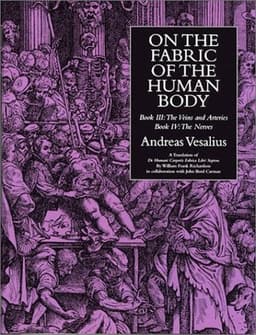
On the Fabric of the Human Body: A Translation of De Humana Corporis Fabrica Libri Septem
Andreas Vesalius
Vesalius’s De humani corporis fabrica libri septem, first published in 1543 is, along with William Harvey’s classic work from 1628 on the discovery of the circulation of the blood, one of the two most famous books in the history of medicine. A cornerstone of the scientific revolution, published the same year as Copernicus’s monumental treatise on the heliocentric universe, De humani corporis fabrica inaugurated the modern study of anatomy, leading to the eventual overturn of the Galenic system that had dominated medical science for fourteen centuries. Illustrated with woodcuts by artists in the school of Titian that have for centuries remained standard icons of medical literature, Vesalius’s work is also a classic of sixteenth-century graphic art. When it was originally published in the mid-sixteenth century its Latin text guaranteed its accessibility to an international medical and scientific audience, all of whom had been educated to read and write Latin. Of course, fewer and fewer physicians and scientists read Latin today, and even professional classicists have reported considerable difficulty in deciphering Vesalius’s technical Renaissance medical Latin. Although many editions, revisions, adaptations, and facsimiles of this work appeared over the centuries, remarkably it was never before now translated, except for fragments, into a modern language other than Russian (Moscow, 1950–1954). The Richardson and Carman translation will supply a modern, accessible version of this monumental work for the first time. Readers will be impressed by the quality of the detailed anatomy and may be surprised by the grandeur and elegance of Vesalius’s literary style as rendered by the translators. The third volume in Richardson and Carman’s translation contains the third and fourth books of Vesalius’s Fabrica. Book The Veins and Arteries is made up of fifteen chapters; Book The Nerves of seventeen, for a total of thirty-two chapters. In addition to the numerous woodcuts in the text, the volume reproduces Vesalius’s two magnificent folding illustrations of the blood vessels and of the nerves. The majority of the chapters in both books end with detailed translator’s notes explaining subtleties in the translation. There are also indexes to the arteries, veins, nerves and muscles, to the text, to people and places, to words from Greek and Latin, and to the translator’s notes. Informative and interpretive prefaces by the translator and anatomist provide details about the translation process of the book and anatomy described therein.
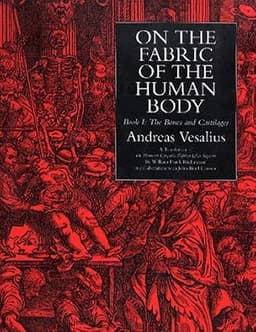
On the Fabric of the Human Body: Book 1 : The Bones and Cartilages (NORMAN ANATOMY SERIES)
Andreas Vesalius
English (translation)Original Latin
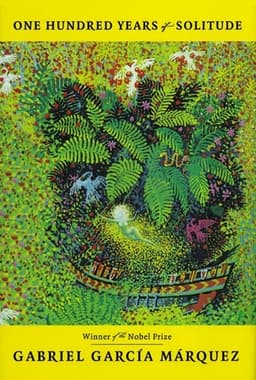
One Hundred Years of Solitude
Gabriel García Márquez
Probably García Márquez finest and most famous work. One Hundred Years of Solitude tells the story of the rise and fall, birth and death of a mythical town of Macondo through the history of the Buendia family. Inventive, amusing, magnetic, sad, alive with unforgettable men and women, and with a truth and understanding that strike the soul. One Hundred Years of Solitude is a masterpiece of the art of fiction.

The Stranger
Albert Camus
Published in 1942 by French author Albert Camus, The Stranger has long been considered a classic of twentieth-century literature. Le Monde ranks it as number one on its "100 Books of the Century" list. Through this story of an ordinary man unwittingly drawn into a senseless murder on a sundrenched Algerian beach, Camus explores what he termed "the nakedness of man faced with the absurd."
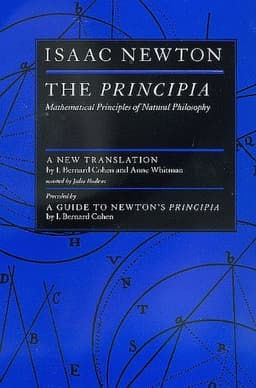
The Principia : Mathematical Principles of Natural Philosophy
Isaac Newton
In his monumental 1687 work Philosophiae Naturalis Principia Mathematica, known familiarly as the Principia, Isaac Newton laid out in mathematical terms the principles of time, force, and motion that have guided the development of modern physical science. Even after more than three centuries and the revolutions of Einsteinian relativity and quantum mechanics, Newtonian physics continues to account for many of the phenomena of the observed world, and Newtonian celestial dynamics is used to determine the orbits of our space vehicles.This completely new translation, the first in 270 years, is based on the third (1726) edition, the final revised version approved by Newton; it includes extracts from the earlier editions, corrects errors found in earlier versions, and replaces archaic English with contemporary prose and up-to-date mathematical forms. Newton's principles describe acceleration, deceleration, and inertial movement; fluid dynamics; and the motions of the earth, moon, planets, and comets. A great work in itself, the Principia also revolutionized the methods of scientific investigation. It set forth the fundamental three laws of motion and the law of universal gravity, the physical principles that account for the Copernican system of the world as emended by Kepler, thus effectively ending controversy concerning the Copernican planetary system.The illuminating Guide to the Principia by I. Bernard Cohen, along with his and Anne Whitman's translation, will make this preeminent work truly accessible for today's scientists, scholars, and students.
Hunt, Gather, Parent: What Ancient Cultures Can Teach Us About the Lost Art of Raising Happy, Helpful Little Humans
Michaeleen Doucleff
When Dr. Michaeleen Doucleff becomes a mother, she examines the studies behind modern parenting guidance and finds the evidence frustratingly limited and the conclusions often ineffective. Curious to learn about more effective parenting approaches, she visits a Maya village in the Yucatán Peninsula. There she encounters moms and dads who parent in a totally different way than we do—and raise extraordinarily kind, generous, and helpful children without yelling, nagging, or issuing timeouts. What else, Doucleff wonders, are Western parents missing out on? In Hunt, Gather, Parent, Doucleff sets out with her three-year-old daughter in tow to learn and practice parenting strategies from families in three of the world’s most venerable communities: Maya families in Mexico, Inuit families above the Arctic Circle, and Hadzabe families in Tanzania. She sees that these cultures don’t have the same problems with children that Western parents do. Most strikingly, parents build a relationship with young children that is vastly different from the one many Western parents develop—it’s built on cooperation instead of control, trust instead of fear, and personalized needs instead of standardized development milestones. Maya parents are masters at raising cooperative children. Without resorting to bribes, threats, or chore charts, Maya parents rear loyal helpers by including kids in household tasks from the time they can walk. Inuit parents have developed a remarkably effective approach for teaching children emotional intelligence. When kids cry, hit, or act out, Inuit parents respond with a calm, gentle demeanor that teaches children how to settle themselves down and think before acting. Hadzabe parents are world experts on raising confident, self-driven kids with a simple tool that protects children from stress and anxiety, so common now among American kids. Not only does Doucleff live with families and observe their techniques firsthand, she also applies them with her own daughter, with striking results. She learns to discipline without yelling. She talks to psychologists, neuroscientists, anthropologists, and sociologists and explains how these strategies can impact children’s mental health and development. Filled with practical takeaways that parents can implement immediately, Hunt, Gather, Parent helps us rethink the ways we relate to our children, and reveals a universal parenting paradigm adapted for American families.
How to Talk So Little Kids Will Listen: A Survival Guide to Life with Children Ages 2-7
Joanna Faber
A must-have resource for anyone who lives or works with young kids, with an introduction by Adele Faber, coauthor of How to Talk So Kids Will Listen & Listen So Kids Will Talk , the international mega-bestseller The Boston Globe dubbed “The Parenting Bible.”For over thirty-five years, parents have turned to How to Talk So Kids Will Listen & Listen So Kids Will Talk for its respectful and effective solutions to the unending challenges of raising children. Now, in response to growing demand, Adele’s daughter, Joanna Faber, along with Julie King, tailor How to Talk’s powerful communication skills to children ages two to seven.Faber and King, each a parenting expert in her own right, share their wisdom accumulated over years of conducting How To Talk workshops with parents and a broad variety of professionals. With a lively combination of storytelling, cartoons, and fly-on-the-wall discussions from their workshops, they provide concrete tools and tips that will transform your relationship with the young kids in your life.What do you do with a little kid who…won’t brush her teeth…screams in his car seat…pinches the baby...refuses to eat vegetables…throws books in the library...runs rampant in the supermarket? Organized according to common challenges and conflicts, this book is an essential emergency first-aid manual of communication strategies, including a chapter that addresses the special needs of children with sensory processing and autism spectrum disorders.This user-friendly guide will empower parents and caregivers of young children to forge rewarding, joyful relationships with terrible two-year-olds, truculent three-year-olds, ferocious four-year-olds, foolhardy five-year-olds, self-centered six-year-olds, and the occasional semi-civilized seven-year-old. And, it will help little kids grow into self-reliant big kids who are cooperative and connected to their parents, teachers, siblings, and peers.
The Anxious Generation: How the Great Rewiring of Childhood Caused an Epidemic of Mental Illness
Jonathan Haidt
THE INSTANT #1 NEW YORK TIMES BESTSELLER • A Wall Street Journal Top 10 Book of 2024 • A Washington Post Notable Book • A New York Times Notable Book • The Goodreads Choice Award Nonfiction Book of the YearA must-read for all parents: the generation-defining investigation into the collapse of youth mental health in the era of smartphones, social media, and big tech—and a plan for a healthier, freer childhood.“With tenacity and candor, Haidt lays out the consequences that have come with allowing kids to drift further into the virtual world . . . While also offering suggestions and solutions that could help protect a new generation of kids.” —Shannon Carlin, ,i>TIME, 100 Must-Read Books of 2024After more than a decade of stability or improvement, the mental health of adolescents plunged in the early 2010s. Rates of depression, anxiety, self-harm, and suicide rose sharply, more than doubling on many measures. Why?In The Anxious Generation, social psychologist Jonathan Haidt lays out the facts about the epidemic of teen mental illness that hit many countries at the same time. He then investigates the nature of childhood, including why children need play and independent exploration to mature into competent, thriving adults. Haidt shows how the “play-based childhood” began to decline in the 1980s, and how it was finally wiped out by the arrival of the “phone-based childhood” in the early 2010s. He presents more than a dozen mechanisms by which this “great rewiring of childhood” has interfered with children’s social and neurological development, covering everything from sleep deprivation to attention fragmentation, addiction, loneliness, social contagion, social comparison, and perfectionism. He explains why social media damages girls more than boys and why boys have been withdrawing from the real world into the virtual world, with disastrous consequences for themselves, their families, and their societies.Most important, Haidt issues a clear call to action. He diagnoses the “collective action problems” that trap us, and then proposes four simple rules that might set us free. He describes steps that parents, teachers, schools, tech companies, and governments can take to end the epidemic of mental illness and restore a more humane childhood.Haidt has spent his career speaking truth backed by data in the most difficult landscapes—communities polarized by politics and religion, campuses battling culture wars, and now the public health emergency faced by Gen Z. We cannot afford to ignore his findings about protecting our children—and ourselves—from the psychological damage of a phone-based life.
Artemis
Andy Weir
Jazz Bashara is a criminal. Well, sort of. Life on Artemis, the first and only city on the moon, is tough if you're not a rich tourist or an eccentric billionaire. So smuggling in the occasional harmless bit of contraband barely counts, right? Not when you've got debts to pay and your job as a porter barely covers the rent. Everything changes when Jazz sees the chance to commit the perfect crime, with a reward too lucrative to turn down. But pulling off the impossible is just the start of her problems, as she learns that she's stepped square into a conspiracy for control of Artemis itself—and that now, her only chance at survival lies in a gambit even riskier than the first.
The 5 Principles of Parenting: Your Essential Guide to Raising Good Humans
Aliza Pressman
Let go of perfect and become a transformative, positive influence in a child’s life while creating your own definition of success from developmental psychologist and podcaster Dr. Aliza Pressman.“My go-to for how we all, including ourselves, raise good humans! ” —Drew BarrymoreIn the age of high-pressure parenting, when so many of us we feel like we’ve got to get everything exactly right the first time, Dr. Aliza Pressman is the compassionate, reassuring expert we all need—and the one whose advice we can all use. Already beloved by listeners of hit podcast, Raising Good Humans , Dr. Pressman distills it all with a handful of strategies every parent can use to get things right often enough : Relationship, Reflection, Regulation, Rules, and Repair.The 5 Principles of Parenting doesn’t presume to tell you how to parent with “my way is right” advice because the science is There’s no one “right” way to raise good humans. No matter how you were raised, how your coparent behaves, or how your kids have been parented up until now, you can start using The 5 Principles of Parenting to chart a manageable course for raising good humans that’s aligned with your own values and with your children’s unique temperaments. Whether you're in the trenches with a toddler or a tween (because spoiler the tantrums of childhood mirror of the tantrums of adolescence), it’s never too late to learn to use these 5 principles to reparent yourself and help your kids build the resilience they need to thrive. Through practice and normalizing imperfection, along the way you’ll discover the person you’re ultimately raising is yourself . By becoming more intentional people, we become better parents. By becoming better parents, we become better people. Let’s get started.
The Silk Roads: A New History of the World
Peter Frankopan
From the Middle East and its political instability to China and its economic rise, the vast region stretching eastward from the Balkans across the steppe and South Asia has been thrust into the global spotlight in recent years. Frankopan teaches us that to understand what is at stake for the cities and nations built on these intricate trade routes, we must first understand their astounding pasts. Frankopan realigns our understanding of the world, pointing us eastward. It was on the Silk Roads that East and West first encountered each other through trade and conquest, leading to the spread of ideas, cultures and religions. From the rise and fall of empires to the spread of Buddhism and the advent of Christianity and Islam, right up to the great wars of the twentieth century—this book shows how the fate of the West has always been inextricably linked to the East.
Everybody Lies: Big Data, New Data, and What the Internet Can Tell Us About Who We Really Are
Seth Stephens-Davidowitz
Foreword by Steven PinkerBlending the informed analysis of The Signal and the Noise with the instructive iconoclasm of Think Like a Freak, a fascinating, illuminating, and witty look at what the vast amounts of information now instantly available to us reveals about ourselves and our world—provided we ask the right questions.By the end of an average day in the early twenty-first century, human beings searching the internet will amass eight trillion gigabytes of data. This staggering amount of information—unprecedented in history—can tell us a great deal about who we are—the fears, desires, and behaviors that drive us, and the conscious and unconscious decisions we make. From the profound to the mundane, we can gain astonishing knowledge about the human psyche that less than twenty years ago, seemed unfathomable.Everybody Lies offers fascinating, surprising, and sometimes laugh-out-loud insights into everything from economics to ethics to sports to race to sex, gender and more, all drawn from the world of big data. What percentage of white voters didn’t vote for Barack Obama because he’s black? Does where you go to school effect how successful you are in life? Do parents secretly favor boy children over girls? Do violent films affect the crime rate? Can you beat the stock market? How regularly do we lie about our sex lives and who’s more self-conscious about sex, men or women?Investigating these questions and a host of others, Seth Stephens-Davidowitz offers revelations that can help us understand ourselves and our lives better. Drawing on studies and experiments on how we really live and think, he demonstrates in fascinating and often funny ways the extent to which all the world is indeed a lab. With conclusions ranging from strange-but-true to thought-provoking to disturbing, he explores the power of this digital truth serum and its deeper potential—revealing biases deeply embedded within us, information we can use to change our culture, and the questions we’re afraid to ask that might be essential to our health—both emotional and physical. All of us are touched by big data everyday, and its influence is multiplying. Everybody Lies challenges us to think differently about how we see it and the world.
Bad Science
Ben Goldacre
How do we know if a treatment works, or if something causes cancer? Can the claims of homeopaths ever be as true—or as interesting—as the improbable research into the placebo effect? Who created the MMR hoax? Do journalists understand science? Why do we seek scientific explanations for social, personal and political problems? Are alternative therapists and the pharmaceutical companies really so different, or do they just use the same old tricks to sell different types of pill? We are obsessed with our health. And yet—from the media's "world-expert microbiologist" with a mail-order Ph.D. in his garden shed laboratory, via multiple health scares and miracle cures, to the million-pound trial that Durham Council now denies ever existed—we are constantly bombarded with inaccurate, contradictory and sometimes even misleading information. Until now. Ben Goldacre masterfully dismantles the dodgy science behind some of the great drug trials, court cases and missed opportunities of our time, but he also goes further: out of the bullshit, he shows us the fascinating story of how we know what we know, and gives us the tools to uncover bad science for ourselves.
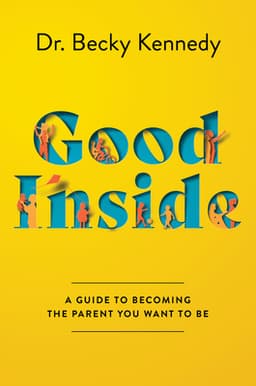
Good Inside: A Practical Guide to Resilient Parenting Prioritizing Connection Over Correction
Becky Kennedy
"This book is for any parent who has ever struggled under the substantial weight of caregiving--which is to say, all of us. Good Inside is not only a wise and practical guide to raising resilient, emotionally healthy kids, it's also a supportive resource for overwhelmed parents who need more compassion and less stress. Dr. Becky is the smart, thoughtful, in-the-trenches parenting expert we've been waiting for!"--Eve Rodsky, New York Times bestselling author of Fair Play and Find Your Unicorn Space Dr. Becky Kennedy, wildly popular parenting expert and creator of @drbeckyatgoodinside, shares her groundbreaking approach to raising kids and offers practical strategies for parenting in a way that feels good.Over the past several years, Dr. Becky Kennedy--known to her followers as "Dr. Becky"--has been sparking a parenting revolution. Millions of parents, tired of following advice that either doesn't work or simply doesn't feel good, have embraced Dr. Becky's empowering and effective approach, a model that prioritizes connecting with our kids over correcting them.Parents have long been sold a model of childrearing that simply doesn't work. From reward charts to time outs, many popular parenting approaches are based on shaping behavior, not raising humans. These techniques don't build the skills kids need for life, or account for their complex emotional needs. Add to that parents' complicated relationships with their own upbringings, and it's easy to see why so many caretakers feel lost, burned out, and worried they're failing their kids. In Good Inside, Dr. Becky shares her parenting philosophy, complete with actionable strategies, that will help parents move from uncertainty and self-blame to confidence and sturdy leadership.Offering perspective-shifting parenting principles and troubleshooting for specific scenarios--including sibling rivalry, separation anxiety, tantrums, and more--Good Inside is a comprehensive resource for a generation of parents looking for a new way to raise their kids while still setting them up for a lifetime of self-regulation, confidence, and resilience.
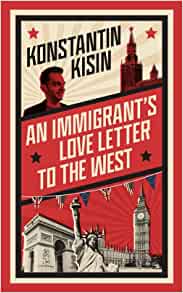
An Immigrant's Love Letter to the West
Konstantin Kisin
For all of the West's failings - terrible food, cold weather, and questionable politicians with funny hair to name a few - it has its upsides. Konstantin would know. Growing up in the Soviet Union, he experienced first-hand the horrors of a socialist paradise gone wrong, having lived in extreme poverty with little access to even the most basic of necessities. It wasn't until he moved to the UK that Kisin found himself thriving in an open and tolerant society, receiving countless opportunities he would never have had otherwise.Funny, provocative and unswervingly perceptive, An Immigrant's Love letter to the West interrogates the developing sense of self-loathing the Western sphere has adopted and offers an alternative perspective. Exploring race politics, free speech, immigration and more, Kisin argues that wrongdoing and guilt need not pervade how we feel about the West - and Britain - today, and that despite all its ups and downs, it remains one of the best places to live in the world.After all, if an immigrant can't publicly profess their appreciation for this country, who can?
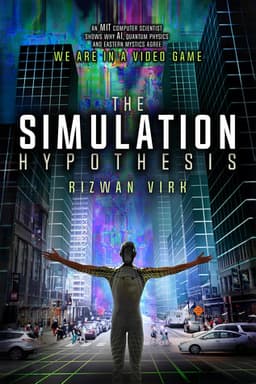
The Simulation Hypothesis
Rizwan Virk
The Simulation Hypothesis, by best-selling author, renowned MIT computer scientist and Silicon Valley video game designer Rizwan Virk, is the first serious book to explain one of the most daring and consequential theories of our time. Riz is the Executive Director of Play Labs @ MIT, a video game startup incubator at the MIT Game Lab.Drawing from research and concepts from computer science, artificial intelligence, video games, quantum physics, and referencing both speculative fiction and ancient eastern spiritual texts, Virk shows how all of these traditions come together to point to the idea that we may be inside a simulated reality like the Matrix.The Simulation Hypothesis is the idea that our physical reality, far from being a solid physical universe, is part of an increasingly sophisticated video game-like simulation, where we all have multiple lives, consisting of pixels with its own internal clock run by some giant Artificial Intelligence. Simulation theory explains some of the biggest mysteries of quantum and relativistic physics, such as quantum indeterminacy, parallel universes, and the integral nature of the speed of light.Recently, the idea that we may be living in a giant video game has received a lot of attention:"There's a one in a billion chance we are not living in a simulation" -Elon Musk"I find it hard to argue we are not in a simulation." -Neil deGrasse Tyson"We are living in computer generated reality." -Philip K. DickVideo game technology has developed from basic arcade and text adventures to MMORPGs. Video game designer Riz Virk shows how these games may continue to evolve in the future, including virtual reality, augmented reality, Artificial Intelligence, and quantum computing. This book shows how this evolution could lead us to the point of being able to develop all encompassing virtual worlds like the Oasis in Ready Player One, or the simulated reality in the Matrix.While the idea sounds like science fiction, many scientists, engineers, and professors have given the Simulation Hypothesis serious consideration. Futurist Ray Kurzweil has popularized the idea of downloading our consciousness into a silicon based device, which would mean we are just digital information after all. Some, like Oxford lecturer Nick Bostrom, goes further and thinks we may in fact be artificially intelligent consciousness inside such a simulation already!But the Simulation Hypothesis is not just a modern idea. Philosophers like Plato have been telling us that we live in a "cave" and can only see shadows of the real world. Mystics of all traditions have long contended that we are living in some kind of "illusion "and that there are other realities which we can access with our minds. While even Judeo-Christian traditions have this idea, Eastern traditions like Buddhism and Hinduism make this idea part of their core tradition -- that we are inside a dream world ("Maya" or illusion, or Vishnu's Dream), and we have "multiple lives" playing different characters when one dies, continuing to gain experience and "level up" after completing certain challenges. Sounds a lot like a video game!Whether you are a computer scientist, a fan of science fiction like the Matrix movies, a video game enthusiast, or a spiritual seeker, The Simulation Hypothesis touches on all these areas, and you will never look at the world the same way again!
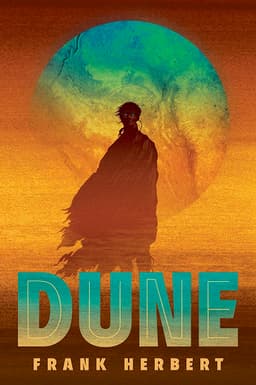
Dune (Dune, #1)
Frank Herbert
Set on the desert planet Arrakis, Dune is the story of the boy Paul Atreides, heir to a noble family tasked with ruling an inhospitable world where the only thing of value is the “spice” melange, a drug capable of extending life and enhancing consciousness. Coveted across the known universe, melange is a prize worth killing for...When House Atreides is betrayed, the destruction of Paul’s family will set the boy on a journey toward a destiny greater than he could ever have imagined. And as he evolves into the mysterious man known as Muad’Dib, he will bring to fruition humankind’s most ancient and unattainable dream.
Autobiography of a Yogi
Paramahansa Yogananda
This acclaimed autobiography presents a fascinating portrait of one of the great spiritual figures of our time. With engaging candor, eloquence, and wit, Paramahansa Yogananda narrates the inspiring chronicle of his life: the experiences of his remarkable childhood, encounters with many saints and sages during his youthful search throughout India for an illumined teacher, ten years of training in the hermitage of a revered yoga master, and the thirty years that he lived and taught in America. Also recorded here are his meetings with Mahatma Gandhi, Rabindranath Tagore, Luther Burbank, the Catholic stigmatist Therese Neumann, and other celebrated spiritual personalities of East and West. Autobiography of a Yogi is at once a beautifully written account of an exceptional life and a profound introduction to the ancient science of Yoga and its time-honored tradition of meditation. The author clearly explains the subtle but definite laws behind both the ordinary events of everyday life and the extraordinary events commonly termed miracles. His absorbing life story thus becomes the background for a penetrating and unforgettable look at the ultimate mysteries of human existence. Considered a modern spiritual classic, the book has been translated into more than twenty languages and is widely used as a text and reference work in colleges and universities. A perennial bestseller since it was first published sixty years ago, Autobiography of a Yogi has found its way into the hearts of millions of readers around the world.
Fooled by Randomness: The Hidden Role of Chance in Life and in the Markets (Incerto)
Nassim Nicholas Taleb
Fooled by Randomness is a standalone book in Nassim Nicholas Taleb’s landmark Incerto series, an investigation of opacity, luck, uncertainty, probability, human error, risk, and decision-making in a world we don’t understand. The other books in the series are The Black Swan, Antifragile,and The Bed of Procrustes.
The Molecule of More: How a Single Chemical in Your Brain Drives Love, Sex, and Creativity—and Will Determine the Fate of the Human Race
Daniel Z. Lieberman
Why are we obsessed with the things we want and bored when we get them? Why is addiction "perfectly logical" to an addict? Why does love change so quickly from passion to indifference? Why are some people diehard liberals and others hardcore conservatives? Why are we always hopeful for solutions even in the darkest times--and so good at figuring them out? The answer is found in a single chemical in your brain: dopamine. Dopamine ensured the survival of early man. Thousands of years later, it is the source of our most basic behaviors and cultural ideas--and progress itself. Dopamine is the chemical of desire that always asks for more--more stuff, more stimulation, and more surprises. In pursuit of these things, it is undeterred by emotion, fear, or morality. Dopamine is the source of our every urge, that little bit of biology that makes an ambitious business professional sacrifice everything in pursuit of success, or that drives a satisfied spouse to risk it all for the thrill of someone new. Simply put, it is why we seek and succeed; it is why we discover and prosper. Yet, at the same time, it's why we gamble and squander. From dopamine's point of view, it's not the having that matters. It's getting something--anything--that's new. From this understanding--the difference between possessing something versus anticipating it--we can understand in a revolutionary new way why we behave as we do in love, business, addiction, politics, religion - and we can even predict those behaviors in ourselves and others. In The Molecule of More: How a Single Chemical in Your Brain Drives Love, Sex, and Creativity--and will Determine the Fate of the Human Race, George Washington University professor and psychiatrist Daniel Z. Lieberman, MD, and Georgetown University lecturer Michael E. Long present a potentially life-changing proposal: Much of human life has an unconsidered component that explains an array of behaviors previously thought to be unrelated, including why winners cheat, why geniuses often suffer with mental illness, why nearly all diets fail, and why the brains of liberals and conservatives really are different.
Power And Prediction: The Disruptive Economics of Artificial Intelligence
Ajay Agrawal
Disruption resulting from the proliferation of AI is coming. The authors of the bestselling Prediction Machines describe what you can do to prepare.Banking and finance, pharmaceuticals, automotive, medical technology, retail. Artificial intelligence (AI) has made its way into many industries around the world. But the truth is, it has just begun its odyssey toward cheaper, better, and faster predictions to drive strategic business decisions--powering and accelerating business. When prediction is taken to the max, industries transform. The disruption that comes with such transformation is yet to be felt--but it is coming.How do businesses prepare? In their bestselling first book, Prediction Machines, eminent economists Ajay Agrawal, Joshua Gans, and Avi Goldfarb explained the simple yet game-changing economics of AI. Now, in Power and Prediction, they go further to reveal AI as a prediction technology directly impacting decision-making and to teach businesses how to identify disruptive opportunities and threats resulting from AI. Their exhaustive study of new developments in artificial intelligence and the past history of how technologies have disrupted industries highlights the striking phase we are now in: after witnessing the power of this new technology and before its widespread adoption--what they call "the Between Times." While there continue to be important opportunities for businesses, there are also threats of disruption. As prediction machines improve, old ways of doing things will be upended. Also, the process by which AI filters into the many systems involved in application is very uneven. That process will have winners and losers. How can businesses leverage, or protect, their positions?Filled with illuminating insights, rich examples, and practical advice, Power and Prediction is the must-read guide for any business leader or policy maker on how to make the coming AI disruptions work for you rather than against you.
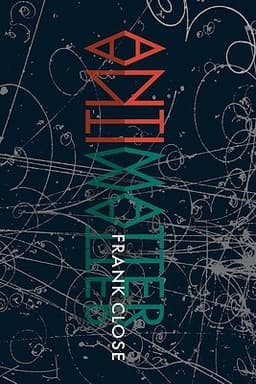
Antimatter
Frank Close
Of all the mind-bending discoveries of physics--quarks, black holes, strange attractors, curved space--the existence of antimatter is one of the most bizarre. It is also one of the most difficult, literally and figuratively, to grasp. Antimatter explores this strange mirror world, where particles have identical yet opposite properties to those that make up the familiar matter we encounter everyday, where left becomes right, positive becomes negative, and where--should matter and antimatter meet--the resulting flash of blinding energy would make even thermonuclear explosions look feeble by comparison. Antimatter is an idea long beloved of science-fiction writers--but here, renowned science writer Frank Close shows that the reality of antimatter is even more intriguing than the fiction. We know that at one time antimatter and matter existed in perfect counterbalance, and that antimatter then perpetrated a vanishing act on a cosmic scale that remains one of the great mysteries of the universe. Today, antimatter does not exist normally, at least on Earth, but we know that it is real, as scientists are now able to make small pieces of it in particle accelerators, such as that at CERN in Geneva. Looking at the remarkable prediction of antimatter and how it grew from the meeting point of relativity and quantum theory in the early 20th century, at the discovery of the first antiparticles, at cosmic rays, annihilation, antimatter bombs, and antiworlds, Close separates the facts from the fiction about antimatter, and explains how its existence can give us profound clues about the origins and structure of the universe. For all those wishing to take a closer look at the flip side of the visible world, this lucidly written book shines a bright light into a truly strange realm. "Beautifully written... This book will inspire a sense of awe in even the most seasoned of physics readers." --Amanda Gefter, New Scientist "This is a must read for fans of science and science fiction alike." --John Gribbin, www.bbcfocusmagazine.com
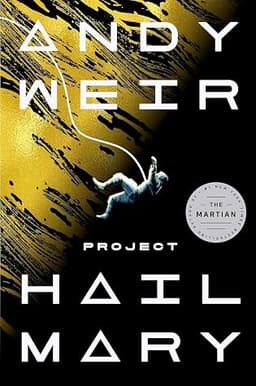
Project Hail Mary
Andy Weir
A LONE ASTRONAUT. AN IMPOSSIBLE MISSION. AN ALLY HE NEVER IMAGINED. RYLAND GRACE is the sole survivor on a desperate, last-chance mission—and if he fails, humanity and Earth itself will perish.Except that right now, he doesn’t know that. He can’t even remember his own name, let alone the nature of his assignment or how to complete it.All he knows is that he’s been asleep for a very, very long time. And he’s just been awakened to find himself millions of miles from home, with nothing but two corpses for company.His crewmates dead, his memories fuzzily returning, Ryland realizes that an impossible task now confronts him. Hurtling through space on this tiny ship, it’s up to him to puzzle out an impossible scientific mystery—and conquer an extinction-level threat to our species.And with the clock ticking down and the nearest human being light-years away, he’s got to do it all alone.Or does he?An irresistible interstellar adventure as only Andy Weir could imagine it, Project Hail Mary is a tale of discovery, speculation, and survival to rival The Martian—while taking us to places it never dreamed of going.
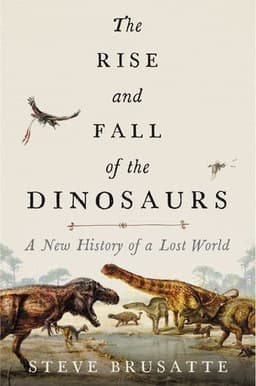
The Rise and Fall of the Dinosaurs: A New History of a Lost World
Steve Brusatte
The dinosaurs. Sixty-six million years ago, the Earth’s most fearsome creatures vanished. Today they remain one of our planet’s great mysteries. Now The Rise and Fall of the Dinosaurs reveals their extraordinary, 200-million-year-long story as never before.In this captivating narrative (enlivened with more than seventy original illustrations and photographs), Steve Brusatte, a young American paleontologist who has emerged as one of the foremost stars of the field—naming fifteen new species and leading groundbreaking scientific studies and fieldwork—masterfully tells the complete, surprising, and new history of the dinosaurs, drawing on cutting-edge science to dramatically bring to life their lost world and illuminate their enigmatic origins, spectacular flourishing, astonishing diversity, cataclysmic extinction, and startling living legacy. Captivating and revelatory, The Rise and Fall of the Dinosaurs is a book for the ages.Brusatte traces the evolution of dinosaurs from their inauspicious start as small shadow dwellers—themselves the beneficiaries of a mass extinction caused by volcanic eruptions at the beginning of the Triassic period—into the dominant array of species every wide-eyed child memorizes today, T. rex, Triceratops, Brontosaurus, and more. This gifted scientist and writer re-creates the dinosaurs’ peak during the Jurassic and Cretaceous, when thousands of species thrived, and winged and feathered dinosaurs, the prehistoric ancestors of modern birds, emerged. The story continues to the end of the Cretaceous period, when a giant asteroid or comet struck the planet and nearly every dinosaur species (but not all) died out, in the most extraordinary extinction event in earth’s history, one full of lessons for today as we confront a “sixth extinction.”Brusatte also recalls compelling stories from his globe-trotting expeditions during one of the most exciting eras in dinosaur research—which he calls “a new golden age of discovery”—and offers thrilling accounts of some of the remarkable findings he and his colleagues have made, including primitive human-sized tyrannosaurs; monstrous carnivores even larger than T. rex; and paradigm-shifting feathered raptors from China.An electrifying scientific history that unearths the dinosaurs’ epic saga, The Rise and Fall of the Dinosaurs will be a definitive and treasured account for decades to come.Includes 75 images, world maps of the prehistoric earth, and a dinosaur family tree.
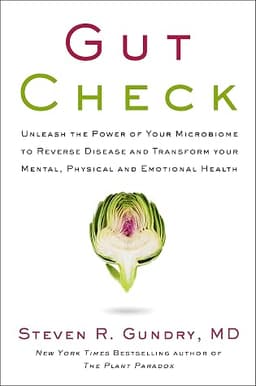
Gut Check: Unleash the Power of Your Microbiome to Reverse Disease and Transform Your Mental, Physical, and Emotional Health
Steven R. Gundry
In this groundbreaking addition to his New York Times bestselling Plant Paradox series, Steven R.Gundry, MD offers a definitive guide to the gut biome and its control over its home — us! — revealing the unimaginably complex and intelligent ecosystem controlling our health and teaching us how to heal our guts to prevent and reverse every type of disease. We may believe that we are the masters of our fates, but in reality, we are at the mercy of hundreds of trillions of single-celled organisms that exert control over every aspect of how our minds and bodies function. These are the diverse species of microbes living in our guts, mouths, and skin that work together synergistically to communicate with each other and with every system in our bodies. You are your microbiome’s home, and it wants to take care of you, but first you have to protect it. In Gut Check , Dr. Steven Gundry reveals the emerging science proving that Hippocrates was right – all disease begins in the gut. When our microbiomes are out of balance, it affects our immune systems, our hormone levels, our mental health, our longevity, and our risk of developing autoimmunity, heart, and neurodegenerative disease, as well as arthritis, diabetes, and cancer. Yet, not all hope is disease can also be healed in the gut if we choose to treat our microbes right. In Gut Check , Dr. Gundry shows us how. In his warm, authoritative voice, Dr. Gundry provides us with the keys to unlocking our gut health, allowing our bodies, and its microbiome, to function at their highest potential. Sharing shocking new research as well as a detailed eating plan with food lists and recipes to heal and rebalance the microbiome, Gut Check provides the cutting-edge information and tools we need to repair our health and reclaim our lives.
The Six Disciplines of Strategic Thinking: Leading Your Organization into the Future
Michael D. Watkins
International bestselling author of The First 90 Days Michael D. Watkins presents an actionable new framework to help aspiring leaders learn to think strategically—a set of skills more necessary than ever in a world of constant change. Pattern recognition. Systems perspective. Mental agility. Structured problem-solving. Visioning. Political savvy. For every good leader who has mastered of one of these disciplines is a great leader who knows and has mastered all of them. Michael D. Watkins, an expert on leadership transitions and organizational success, returns to the page with a new how-to guide for the modern leader. Here, he presents the six disciplines that separate the great from the good. Developed over the course of his storied career, Watkins’ approach to strategic thinking—"a set of mental disciplines leaders use to recognize potential threats and opportunities, establish priorities, and mobilize themselves and their organizations to envision and enact promising paths forward”—is the model followed by some of today’s most successful first-time CEOs and new business leaders. The Six Disciplines of Strategic Thinking is a comprehensive and practical guide to strategic thinking, offering a wealth of insights and tools for leaders at all levels.
![Cover of The Book You Wish Your Parents Had Read [and Your Children Will Be Glad That You Did]](/_next/image?url=https%3A%2F%2Fi.gr-assets.com%2Fimages%2FS%2Fcompressed.photo.goodreads.com%2Fbooks%2F1679047187l%2F42348818._SY475_.jpg&w=256&q=75)
The Book You Wish Your Parents Had Read [and Your Children Will Be Glad That You Did]
Philippa Perry
This book is about how we have relationships with our children, what gets in the way of a good connection and what can enhance it The most influential relationships are between parents and children. Yet for so many families, these relationships go can wrong and it may be difficult to get back on track. In The Book You Wish Your Parents Had Read (and Your Children Will Be Glad that You Did), renowned psychotherapist Philippa Perry shows how strong and loving bonds are made with your children and how such attachments give a better chance of good mental health, in childhood and beyond.She'll help you to:- Understand how your own upbringing may be impacting upon your parenting style- Contain, express, accept and validate your own and your child's feelings- Understand that all behaviour is communication- Break negative cycles and patterns- Accept that you will make mistakes and what to do about themAlmost every parent loves their children, but by following the refreshing, sage and sane advice and steps in this book you will also find yourselves liking one another too.
Chasing the Sun: The New Science of Sunlight and How it Shapes Our Bodies and Minds
Linda Geddes
The full story of how our relationship with light shapes our health, productivity and mood.'A sparkling and illuminating study, one of those rare books that could genuinely improve your life' Sunday Times'Life changing' Daily Mail'Fascinating and readable ... Geddes's lovely book will fill you with longing!' The TimesSince the dawn of time, humans have worshipped the sun. And with good reason. Our biology is set up to work in partnership with it. From our sleep cycles to our immune systems and our mental health, access to sunlight is crucial for living a happy and fulfilling life. New research suggests that our sun exposure over a lifetime - even before we were born - may shape our risk of developing a range of different illnesses, from depression to diabetes.Bursting with cutting-edge science and eye-opening advice, Chasing the Sun explores the extraordinary significance of sunlight, from ancient solstice celebrations to modern sleep labs, and from the unexpected health benefits of sun exposure to what the Amish know about sleep that the rest of us don't.As more of us move into light-polluted cities, spending our days in dim offices and our evenings watching brightly lit screens, we are in danger of losing something our connection to the star that gave us life. It's a loss that could have far-reaching consequences that we're only just beginning to grasp.
The Martian
Andy Weir
Six days ago, astronaut Mark Watney became one of the first people to walk on Mars. Now, he’s sure he’ll be the first person to die there.After a dust storm nearly kills him and forces his crew to evacuate while thinking him dead, Mark finds himself stranded and completely alone with no way to even signal Earth that he’s alive—and even if he could get word out, his supplies would be gone long before a rescue could arrive. Chances are, though, he won’t have time to starve to death. The damaged machinery, unforgiving environment, or plain-old “human error” are much more likely to kill him first. But Mark isn’t ready to give up yet. Drawing on his ingenuity, his engineering skills — and a relentless, dogged refusal to quit — he steadfastly confronts one seemingly insurmountable obstacle after the next. Will his resourcefulness be enough to overcome the impossible odds against him?
Operating Instructions: A Journal of My Son's First Year
Anne Lamott
The most honest, wildly enjoyable book written about motherhood is surely Anne Lamott's account of her son Sam's first year. A gifted writer and teacher, Lamott (Crooked Little Heart) is a single mother and ex-alcoholic with a pleasingly warped social circle and a remarkably tolerant religion to lean on. She responds to the changes, exhaustion, and love Sam brings with aplomb or outright insanity. The book rocks from hilarious to unbearably poignant when Sam's burgeoning life is played out against a very close friend's illness. No saccharine paean to becoming a parent, this touches on the rage and befuddlement that dog sweeter emotions during this sea change in one's life.
The Whisper Man
Alex North
After the sudden death of his wife, Tom Kennedy believes a fresh start will help him and his young son Jake heal. A new beginning, a new house, a new town. Featherbank.But the town has a dark past. Twenty years ago, a serial killer abducted and murdered five residents. Until Frank Carter was finally caught, he was nicknamed "The Whisper Man," for he would lure his victims out by whispering at their windows at night.Just as Tom and Jake settle into their new home, a young boy vanishes. His disappearance bears an unnerving resemblance to Frank Carter's crimes, reigniting old rumors that he preyed with an accomplice. Now, detectives Amanda Beck and Pete Willis must find the boy before it is too late, even if that means Pete has to revisit his great foe in prison: The Whisper Man.And then Jake begins acting strangely. He hears a whispering at his window...
A Wanted Man (Jack Reacher, #17)
Lee Child
Four people in a car, hoping to make Chicago by morning. One man driving, eyes on the road. Another man next to him, telling stories that don’t add up. A woman in the back, silent and worried. And next to her, a huge man with a broken nose, hitching a ride east to Virginia. An hour behind them, a man lies stabbed to death in an old pumping station. He was seen going in with two others, but he never came out. He has been executed, the knife work professional, the killers vanished. Within minutes, the police are notified. Within hours, the FBI descends, laying claim to the victim without ever saying who he was or why he was there. All Reacher wanted was a ride to Virginia. All he did was stick out his thumb. But he soon discovers he has hitched more than a ride. He has tied himself to a massive conspiracy that makes him a threat - to both sides at once.14 hr., 30 min
The Double Helix
James D. Watson
By identifying the structure of DNA, the molecule of life, Francis Crick and James Watson revolutionized biochemistry & won themselves a Nobel Prize. At the time, Watson was only 24, a young scientist hungry to make his mark. His uncompromisingly honest account of the heady days of their thrilling sprint against other world-class researchers to solve one of science's greatest mysteries gives a dazzlingly clear picture of a world of brilliant scientists with great gifts, very human ambitions & bitter rivalries. With humility unspoiled by false modesty, Watson relates his & Crick's desperate efforts to beat Linus Pauling to the Holy Grail of life sciences, the identification of the basic building block of life. Never has a scientist been so truthful in capturing in words the flavor of his work.
The Motorcycle Diaries: Notes on a Latin American Journey
Ernesto Che Guevara
«Մոտոցիկլավարի օրագիրը». 1948 թ. Չե Գևարան ընդունվում է Բուենոս Այրեսի համալսարանի ընդհանուր բժշկության ֆակուլտետ։ Նրա՝ աշխարհն ուսումնասիրելու տենչը, փոփոխեց նրա համալսարանական կյանքը, և իր երկու երկարատև ուղևորությունները հիմնովին փոխեցին նրա ներաշխարհն ու պատկերացումները այդ ժամանակների Լատինական Ամերիկայի տնտեսական իրավիճակի վերաբերյալ։ Առաջին արշավը 1950 թ. էր, 4500 կմ (2800 մղոն), նա մենակ ուղևորվում է դեպի հյուսիսային Արգենտինայի գյուղական շրջաններ հեծանիվով, որի վրա փոքրիկ շարժիչ էր տեղադրել։ Սրան հաջորդում է 1951 թ. 8000 կմ երկարությամբ (5000 մղոն) իննամսյա մայրցամաքային արշավը մոտոցիկլով դեպի Հարավային Ամերիկա։ Վերջին ուղևորության պատճառով նա մեկ տարի չհաճախեց դասերի, փոխարենը ձեռնարկեց այս արշավը իր ընկերոջ՝ Ալբերտո Գրանադայի հետ։ Նրանց հիմնական նպատակը Պերուի Սան Պաբլոյի բորոտների գաղութում, Ամազոն գետի ափին մի քանի շաբաթ որպես կամավորներ մնալն էր։Չիլիում Գևարային բարկացնում է հանքահորների աշխատանքային պայմանները Անակոնդայի Չուքիկամատա պղնձի հանքում, և նա գիշերում է Ատակամա անապատում հալածված կոմունիստ ամուսինների հետ, ովքեր անգամ վերմակ չունեին և իրենց ներկայացնում էին որպես կապիտալիստական շահագործման իրական զոհեր։ Բացի այդ, Մաչու Պիկչուի ճանապարհին՝ Անդերի բարձունքում, նա բախվում է հեռավոր գյուղական բնակավայրերի ծայրահեղ աղքատությանը, որտեղ գյուղացի ագարակատերերը աշխատում էին մեծահարուստներին պատկանող փոքր հողատարածքների վրա։ Ավելի ուշ իր ուղևորության ընթացքում Գևարան տպավորված էր այդ բորոտների գաղութում ապրող մարդկանց ընկերասիրության վրա։ Նա ասում է. «Մարդկային համերաշխության և ընկերասիրության բարձրագույն արժեքները առկա են այսպիսի միայնակ և հուսահատ մարդկանց մեջ»Գևարան իր այս ուղևորության ընթացքում կատարած նշումները հետագայում օգտագործում է իր զեկույցի համար վերնագրված ՝ «Մոտոցիկլային օրագրեր» գրքում, որը հետագայում դարձավ «New York Times»-ի ամենավաճառված գիրքը։ 2004 թվականին մրցանակ ստացավ նաև գրքի հիման վրա նկարահանված համանուն վերնագրով ֆիլմը։Ուղևորությունը դեպի Արգենտինա, Չիլի, Պերու, Էկվադոր, Պանամա, Մայամի, Ֆլորիդա Գևարայից խլեց 20 օր, նախքան Բուենոս Այրես վերադառնալը։ Լատինական Ամերիկան առանձին ազգերի միություն չէր, այլ մի ամբողջատիրություն, որը մայրցամաքային ազատագրման քաղաքականություն էր վարում։ Նրա գաղափարը միացյալ, անծայրածիր Իսպանական Ամերիկայի ստեղծումն էր, որը կիսում էր ընդհանուր լատինական ժառանգությունը, մի թեմա, որին նա ժամանակ առ ժամանակ անդրադառնում է իր հետագա հեղափոխական գործունեության ընթացքում։ Վերադառնալով Արգենտինա՝ նա ավարտում է ուսումը և 1953 թ. պաշտոնապես ստանում բժշկի կոչում՝ «Բժիշկ Չե Գևարա»
The Overstory
Richard Powers
The Overstory is a sweeping, impassioned work of activism and resistance that is also a stunning evocation of - and paean to - the natural world. From the roots to the crown and back to the seeds, Richard Powers’s twelfth novel unfolds in concentric rings of interlocking fables that range from antebellum New York to the late twentieth-century Timber Wars of the Pacific Northwest and beyond. There is a world alongside ours—vast, slow, interconnected, resourceful, magnificently inventive, and almost invisible to us. This is the story of a handful of people who learn how to see that world and who are drawn up into its unfolding catastrophe.A New York Times Bestseller.
The Future of Capitalism: Facing the New Anxieties
Paul Collier
Bill Gates's Five Books for Summer Reading 2019From world-renowned economist Paul Collier, a candid diagnosis of the failures of capitalism and a pragmatic and realistic vision for how we can repair it.Deep new rifts are tearing apart the fabric of the United States and other Western societies: thriving cities versus rural counties, the highly skilled elite versus the less educated, wealthy versus developing countries. As these divides deepen, we have lost the sense of ethical obligation to others that was crucial to the rise of post-war social democracy. So far these rifts have been answered only by the revivalist ideologies of populism and socialism, leading to the seismic upheavals of Trump, Brexit, and the return of the far-right in Germany. We have heard many critiques of capitalism but no one has laid out a realistic way to fix it, until now.In a passionate and polemical book, celebrated economist Paul Collier outlines brilliantly original and ethical ways of healing these rifts—economic, social and cultural—with the cool head of pragmatism, rather than the fervor of ideological revivalism. He reveals how he has personally lived across these three divides, moving from working-class Sheffield to hyper-competitive Oxford, and working between Britain and Africa, and acknowledges some of the failings of his profession.Drawing on his own solutions as well as ideas from some of the world’s most distinguished social scientists, he shows us how to save capitalism from itself—and free ourselves from the intellectual baggage of the twentieth century.
The Selfish Gene
Richard Dawkins
"The Selfish Gene" caused a wave of excitement among biologists and the general public when it was first published in 1976. Its vivid rendering of a gene's eye view of life, in lucid prose, gathered together the strands of thought about the nature of natural selection into a conceptual framework with far-reaching implications for our understanding of evolution. Time has confirmed its significance. Intellectually rigorous, yet written in non-technical language, "The Selfish Gene" is widely regarded as a masterpiece of science writing, and its insights remain as relevant today as on the day it was published.Chapters:1. Why are people?2. The replicators3. Immortal coils4. The gene machine5. Aggression stability and the selfish machine6. Genesmanship7. Family planning8. Battle of the generations9. Battle of the sexes10. You scratch my back, I'll ride on yours11. Memes: the new replicators12. Nice guys finish first13. The long reach of the gene
A Molecule Away from Madness: Tales of the Hijacked Brain
Sara Manning Peskin
Our brains are the most complex machines known to humankind, but they have an Achilles heel: the very molecules that allow us to exist can also sabotage our minds. Here are gripping accounts of unruly molecules and the diseases that form in their wake.A college student cannot remember if she has eaten breakfast. By dinner, she is strapped to a hospital bed, convinced she is battling zombies. A man planning to propose marriage instead becomes violently enraged, gripped by body spasms so severe that he nearly bites off his own tongue. One after another, poor farmers in South Carolina drop dead from a mysterious epidemic of dementia.With an intoxicating blend of history and intrigue, Sara Manning Peskin invites readers to play medical detective, tracing each diagnosis from the patient to an ailing nervous system. Along the way, Peskin entertains with tales of the sometimes outlandish, often criticized, and forever devoted scientists who discovered it all.Peskin never loses sight of the human impact of these conditions. Alzheimer’s Disease is more than the gradual loss of a loved one; it can be a family’s multigenerational curse. The proteins that abound in every cell of our bodies are not simply strings of oxygen, hydrogen, nitrogen, and carbon; they are the building blocks of our personalities and relationships. A Molecule Away from Madness is an unputdownable journey into the deepest mysteries of our brains.
101 Essays That Will Change The Way You Think
Brianna Wiest
Over the past few years, Brianna Wiest has gained renown for her deeply moving, philosophical writing. This new compilation of her published work features pieces on why you should pursue purpose over passion, embrace negative thinking, see the wisdom in daily routine, and become aware of the cognitive biases that are creating the way you see your life. Some of these pieces have never been seen; others have been read by millions of people around the world. Regardless, each will leave you thinking: this idea changed my life.
Elon Musk
Walter Isaacson
From the author of Steve Jobs and other bestselling biographies, this is the astonishingly intimate story of the most fascinating and controversial innovator of our era—a rule-breaking visionary who helped to lead the world into the era of electric vehicles, private space exploration, and artificial intelligence. Oh, and took over Twitter.When Elon Musk was a kid in South Africa, he was regularly beaten by bullies. One day a group pushed him down some concrete steps and kicked him until his face was a swollen ball of flesh. He was in the hospital for a week. But the physical scars were minor compared to the emotional ones inflicted by his father, an engineer, rogue, and charismatic fantasist.His father’s impact on his psyche would linger. He developed into a tough yet vulnerable man-child, prone to abrupt Jekyll-and-Hyde mood swings, with an exceedingly high tolerance for risk, a craving for drama, an epic sense of mission, and a maniacal intensity that was callous and at times destructive.At the beginning of 2022—after a year marked by SpaceX launching thirty-one rockets into orbit, Tesla selling a million cars, and him becoming the richest man on earth—Musk spoke ruefully about his compulsion to stir up dramas. “I need to shift my mindset away from being in crisis mode, which it has been for about fourteen years now, or arguably most of my life,” he said.It was a wistful comment, not a New Year’s resolution. Even as he said it, he was secretly buying up shares of Twitter, the world’s ultimate playground. Over the years, whenever he was in a dark place, his mind went back to being bullied on the playground. Now he had the chance to own the playground.For two years, Isaacson shadowed Musk, attended his meetings, walked his factories with him, and spent hours interviewing him, his family, friends, coworkers, and adversaries. The result is the revealing inside story, filled with amazing tales of triumphs and turmoil, that addresses the are the demons that drive Musk also what it takes to drive innovation and progress?
Hidden Potential: The Science of Achieving Greater Things
Adam M. Grant
#1 New York Times bestseller"This brilliant book will shatter your assumptions about what it takes to improve and succeed. I wish I could go back in time and gift it to my younger self. It would've helped me find a more joyful path to progress."-Serena Williams, 23-time Grand Slam singles tennis championThe #1 New York Times bestselling author of Think Again illuminates how we can elevate ourselves and others to unexpected heights.We live in a world that’s obsessed with talent. We celebrate gifted students in school, natural athletes in sports, and child prodigies in music. But admiring people who start out with innate advantages leads us to overlook the distances we ourselves can travel. We can all improve at improving. And when opportunity doesn’t knock, there are ways to build a door.Hidden Potential offers a new framework for raising aspirations and exceeding expectations. Adam Grant weaves together groundbreaking evidence, surprising insights, and vivid storytelling that takes us from the classroom to the boardroom, the playground to the Olympics, and underground to outer space. He shows that progress depends less on how hard you work than how well you learn. Growth is not about the genius you possess – it’s about the character you develop. Grant explores how to build the character skills and motivational structures to realize our own potential, and how to design systems that create opportunities for those who have been underrated and overlooked.This book reveals how anyone can rise to achieve greater things. The true measure of your potential is not the height of the peak you’ve reached, but how far you’ve climbed to get there.
Facing the Mountain: A True Story of Japanese American Heroes in World War II
Daniel James Brown
From the #1 New York Times bestselling author of The Boys in the Boat, a gripping World War II saga of patriotism and courage: the special Japanese-American Army unit that overcame brutal odds in Europe; their families, incarcerated back home; and a young man who refused to surrender his constitutional rights, even if it meant imprisonment.They came from across the continent and Hawaii. Their parents taught them to embrace both their Japanese heritage and the ways of their American homeland. They faced bigotry, yet they believed in their bright futures as American citizens. But within days of Pearl Harbor, the FBI was ransacking their houses and locking up their fathers. And within months many would themselves be living behind barbed wire.Facing the Mountain is an unforgettable chronicle of war-time America and the battlefields of Europe. Based on Daniel James Brown's extensive interviews with the families of the protagonists as well as deep archival research, it portrays the kaleidoscopic journey of four Japanese-American families and their sons, who volunteered for 442nd Regimental Combat Team and were deployed to France, Germany, and Italy, where they were asked to do the near impossible.But this is more than a war story. Brown also tells the story of these soldiers' parents, immigrants who were forced to shutter the businesses, surrender their homes, and submit to life in concentration camps on U.S. soil. Woven throughout is the chronicle of a brave young man, one of a cadre of patriotic resisters who stood up against their government in defense of their own rights. Whether fighting on battlefields or in courtrooms, these were Americans under unprecedented strain, doing what Americans do best--striving, resisting, pushing back, rising up, standing on principle, laying down their lives, and enduring.
Talking to Strangers: What We Should Know About the People We Don't Know
Malcolm Gladwell
Malcolm Gladwell, host of the podcast Revisionist History and author of the #1 New York Times bestseller Outliers, offers a powerful examination of our interactions with strangers -- and why they often go wrong.How did Fidel Castro fool the CIA for a generation? Why did Neville Chamberlain think he could trust Adolf Hitler? Why are campus sexual assaults on the rise? Do television sitcoms teach us something about the way we relate to each other that isn't true?While tackling these questions, Malcolm Gladwell was not solely writing a book for the page. He was also producing for the ear. In the audiobook version of Talking to Strangers, you'll hear the voices of people he interviewed--scientists, criminologists, military psychologists. Court transcripts are brought to life with re-enactments. You actually hear the contentious arrest of Sandra Bland by the side of the road in Texas. As Gladwell revisits the deceptions of Bernie Madoff, the trial of Amanda Knox, and the suicide of Sylvia Plath, you hear directly from many of the players in these real-life tragedies. There's even a theme song - Janelle Monae's "Hell You Talmbout."Something is very wrong, Gladwell argues, with the tools and strategies we use to make sense of people we don't know. And because we don't know how to talk to strangers, we are inviting conflict and misunderstanding in ways that have a profound effect on our lives and our world.
Son of Hamas
Mosab Hassan Yousef
Since he was a small boy, Mosab Hassan Yousef has had an inside view of the deadly terrorist group Hamas. The oldest son of Sheikh Hassan Yousef, a founding member of Hamas and its most popular leader, young Mosab assisted his father for years in his political activities while being groomed to assume his legacy, politics, status . . . and power. But everything changed when Mosab turned away from terror and violence, and embraced instead the teachings of another famous Middle East leader. In Son of Hamas , Mosab Yousef―now called “Joseph”―reveals new information about the world’s most dangerous terrorist organization and unveils the truth about his own role, his agonizing separation from family and homeland, the dangerous decision to make his newfound faith public, and his belief that the Christian mandate to “love your enemies” is the only way to peace in the Middle East.
The Ministry for the Future
Kim Stanley Robinson
Established in 2025, the purpose of the new organization was simple: To advocate for the world's future generations and to protect all living creatures, present and future. It soon became known as the Ministry for the Future, and this is its story. From legendary science fiction author Kim Stanley Robinson comes a vision of climate change unlike any ever imagined. Told entirely through fictional eye-witness accounts, The Ministry for the Future is a masterpiece of the imagination, the story of how climate change will affect us all over the decades to come. Its setting is not a desolate, post-apocalyptic world, but a future that is almost upon us—and in which we might just overcome the extraordinary challenges we face. It is a novel both immediate and impactful, desperate and hopeful in equal measure, and it is one of the most powerful and original books on climate change ever written.
The Enemy (Jack Reacher, #8)
Lee Child
Jack Reacher. Hero. Loner. Soldier. Soldier’s son. An elite military cop, he was one of the army’s brightest stars. But in every cop’s life there is a turning point. One case. One messy, tangled case that can shatter a career. Turn a lawman into a renegade. And make him question words like honor, valor, and duty. For Jack Reacher, this is that case.New Year’s Day, 1990. The Berlin Wall is coming down. The world is changing. And in a North Carolina “hot-sheets” motel, a two-star general is found dead. His briefcase is missing. Nobody knows what was in it. Within minutes Jack Reacher has his orders: Control the situation. But this situation can’t be controlled. Within hours the general’s wife is murdered hundreds of miles away. Then the dominoes really start to fall.Two Special Forces soldiers—the toughest of the tough—are taken down, one at a time. Top military commanders are moved from place to place in a bizarre game of chess. And somewhere inside the vast worldwide fortress that is the U.S. Army, Jack Reacher—an ordinarily untouchable investigator for the 110th Special Unit—is being set up as a fall guy with the worst enemies a man can have.But Reacher won’t quit. He’s fighting a new kind of war. And he’s taking a young female lieutenant with him on a deadly hunt that leads them from the ragged edges of a rural army post to the winding streets of Paris to a confrontation with an enemy he didn’t know he had. With his French-born mother dying—and divulging to her son one last, stunning secret—Reacher is forced to question everything he once believed…about his family, his career, his loyalties—and himself. Because this soldier’s son is on his way into the darkness, where he finds a tangled drama of desperate desires and violent death—and a conspiracy more chilling, ingenious, and treacherous than anyone could have guessed.
Frames Of Mind: The Theory Of Multiple Intelligences
Howard Gardner
A revolutionary challenge to the widely held notion that intelligence is a single general capacity possessed by every individual to a greater or lesser extent. Gardner's trailblazing book revolutionized the worlds of education and psychology by positing that rather than a single type of intelligence, we have several--most of which are neglected by standard testing and educational methods.More than 200,00 copies of earlier editions have been sold; this reissue includes a new introduction by the author to mark the twenty-first birthday of this remarkable book.
What If?: Serious Scientific Answers to Absurd Hypothetical Questions
Randall Munroe
Fans of the xkcd comic ask Munroe a lot of strange questions: What if you tried to hit a baseball pitched at 90 percent the speed of light? How fast can you hit a speed bump while driving and live? If there was a robot apocalypse, how long would humanity last? What if everyone only had one soulmate? What would happen if the moon went away?In pursuit of answers, Munroe runs computer simulations, pores over stacks of declassified military research memos, solves differential equations, and consults with nuclear reactor operators. His responses are masterpieces of clarity and hilarity, complemented by his signature xkcd comics. (They often predict the complete annihilation of humankind, or at least a really big explosion.)In celebration of 10 years of unusual insight, Randall Munroe has revised his classic blockbuster to ask what if? x 10. The result is 10x the adventure of scientific inquiry. Featuring brand-new 2-color annotations and illustrations, this special anniversary edition is far more than a book for geeks, What If? explains the laws of science in operation in a way that every intelligent reader will enjoy and feel much smarter for having read.
Persuader (Jack Reacher, #7)
Lee Child
Jack Reacher. The ultimate loner. An elite ex-military cop who left the service years ago, he's moved from place to place...without family...without possessions...without commitments. And without fear. Which is good, because trouble--big, violent, complicated trouble--finds Reacher wherever he goes. And when trouble finds him, Reacher does not quit, not once...not ever. But some unfinished business has now found Reacher. And Reacher is a man who hates unfinished business. Ten years ago, a key investigation went sour and someone got away with murder. Now a chance encounter brings it all back. Now Reacher sees his one last shot. Some would call it vengeance. Some would call it redemption. Reacher would call it...justice.
What I Learned About Investing from Darwin
Pulak Prasad
The investment profession is in a state of crisis. The vast majority of equity fund managers are unable to beat the market over the long term, which has led to massive outflows from active funds to passive funds. Where should investors turn in search of a new approach?Pulak Prasad offers a philosophy of patient long-term investing based on an unexpected source: evolutionary biology. He draws key lessons from core Darwinian concepts, mixing vivid examples from the natural world with compelling stories of good and bad investing decisions―including his own. How can bumblebees’ survival strategies help us accept that we might miss out on Tesla? What does an experiment in breeding tame foxes reveal about the traits of successful businesses? Why might a small frog’s mimicry of the croak of a larger rival shed light on the signs of corporate dishonesty?Informed by successful evolutionary strategies, Prasad outlines his counterintuitive principles for long-term gain. He provides three mantras of investing: Avoid big risks; buy high quality at a fair price; and don’t be lazy―be very lazy. Prasad makes a persuasive case for a strategy that rules out the vast majority of investment opportunities and advocates permanently owning high-quality businesses.Combining punchy prose and practical insight, What I Learned About Investing from Darwin reveals why evolutionary biology can help fund managers become better at their craft.
Friends, Lovers, and the Big Terrible Thing
Matthew Perry
“Hi, my name is Matthew, although you may know me by another name. My friends call me Matty. And I should be dead.”So begins the riveting story of acclaimed actor Matthew Perry, taking us along on his journey from childhood ambition to fame to addiction and recovery in the aftermath of a life-threatening health scare. Before the frequent hospital visits and stints in rehab, there was five-year-old Matthew, who traveled from Montreal to Los Angeles, shuffling between his separated parents; fourteen-year-old Matthew, who was a nationally ranked tennis star in Canada; twenty-four-year-old Matthew, who nabbed a coveted role as a lead cast member on the talked-about pilot then called Friends Like Us. . . and so much more.In an extraordinary story that only he could tell—and in the heartfelt, hilarious, and warmly familiar way only he could tell it—Matthew Perry lays bare the fractured family that raised him (and also left him to his own devices), the desire for recognition that drove him to fame, and the void inside him that could not be filled even by his greatest dreams coming true. But he also details the peace he’s found in sobriety and how he feels about the ubiquity of Friends, sharing stories about his castmates and other stars he met along the way. Frank, self-aware, and with his trademark humor, Perry vividly depicts his lifelong battle with addiction and what fueled it despite seemingly having it all.Friends, Lovers, and the Big Terrible Thing is an unforgettable memoir that is both intimate and eye-opening—as well as a hand extended to anyone struggling with sobriety. Unflinchingly honest, moving, and uproariously funny, this is the book fans have been waiting for.
Origin Story: A Big History of Everything
David Christian
** A 2018 GoodReads Choice Award Nominee in the History & Biography category**A captivating history of the universe -- from before the dawn of time through the far reaches of the distant future.Most historians study the smallest slivers of time, emphasizing specific dates, individuals, and documents. But what would it look like to study the whole of history, from the big bang through the present day -- and even into the remote future? How would looking at the full span of time change the way we perceive the universe, the earth, and our very existence?These were the questions David Christian set out to answer when he created the field of "Big History," the most exciting new approach to understanding where we have been, where we are, and where we are going. In Origin Story, Christian takes readers on a wild ride through the entire 13.8 billion years we've come to know as "history." By focusing on defining events (thresholds), major trends, and profound questions about our origins, Christian exposes the hidden threads that tie everything together -- from the creation of the planet to the advent of agriculture, nuclear war, and beyond.With stunning insights into the origin of the universe, the beginning of life, the emergence of humans, and what the future might bring, Origin Story boldly reframes our place in the cosmos.
The Code Breaker: Jennifer Doudna, Gene Editing, and the Future of the Human Race
Walter Isaacson
When Jennifer Doudna was in sixth grade, she came home one day to find that her dad had left a paperback titled The Double Helix on her bed. As she sped through the pages, she became enthralled by the intense drama behind the competition to discover the code of life. Even though her high school counselor told her girls didn’t become scientists, she decided she would.Driven by a passion to understand how nature works and to turn discoveries into inventions, she would help to make what the book’s author, James Watson, told her was the most important biological advance since his co-discovery of the structure of DNA. She and her collaborators turned a curiosity of nature into an invention that will transform the human race: an easy-to-use tool that can edit DNA. Known as CRISPR, it opened a brave new world of medical miracles and moral questions. The development of CRISPR and the race to create vaccines for coronavirus will hasten our transition to the next great innovation revolution. The past half-century has been a digital age, based on the microchip, computer, and internet. Now we are entering a life-science revolution. Children who study digital coding will be joined by those who study genetic code. Should we use our new evolution-hacking powers to make us less susceptible to viruses? What a wonderful boon that would be! And what about preventing depression? Hmmm…Should we allow parents, if they can afford it, to enhance the height or muscles or IQ of their kids? After helping to discover CRISPR, Doudna became a leader in wrestling with these moral issues and, with her collaborator Emmanuelle Charpentier, won the Nobel Prize in 2020.
How to Stay Married: The Most Insane Love Story Ever Told
Harrison Scott Key
From Harrison Scott Key, winner of the Thurber Prize for American Humor, How to Stay Married tells the hilarious, shocking, and spiritually profound story of one man’s journey through hell and back when infidelity threatens his marriage.One gorgeous autumn day, Harrison discovers that his wife—the sweet, funny, loving mother of their three daughters, a woman “who’s spent just about every Sunday of her life in a church”—is having an affair with a family friend. This revelation propels the hysterical, heartbreaking action of How to Stay Married , casting our narrator onto “the factory floor of hell,” where his wife was now in love with a man who “wears cargo shorts, on purpose.” What will he do? Kick her out? Set fire to all her panties in the yard? Beat this man to death with a gardening implement? Ask God for help in winning her back?Armed with little but a sense of humor and a hunger for the truth, Harrison embarks on a hellish journey into his past, seeking answers to the riddles of faith and forgiveness. Through an absurd series of escalating confessions and betrayals, Harrison reckons with his failure to love his wife in the ways she needed most, resolves to fight for his family, and in a climax almost too ridiculous to be believed, finally learns that love is no joke. How to Stay Married is a comic romp unlike any in contemporary literature, a wild Pilgrim’s Progress through the hellscape of marriage and the mysteries of mercy.
You're Not Listening: What You're Missing and Why It Matters
Kate Murphy
Who listens to you?New York Times contributor Kate Murphy asked people on five continents this question, and the response was typically a long, awkward pause. People struggled to come up with someone, anyone, who truly listened to them without glazing over, glancing down at a phone, or jumping in to offer an opinion. Many admitted that they, themselves, weren’t very good listeners, and most couldn’t even describe what it meant to be a good listener.Despite living in a world where technology allows constant digital communication and opportunities to connect, it seems no one is really listening or even knows how. And it’s making us lonelier, more isolated, and less tolerant than ever before. A listener by trade, Murphy wanted to know how we got here.In this illuminating and often humorous deep dive, Murphy explains why we’re not listening, what it’s doing to us, and how we can reverse the trend. She makes accessible the psychology, neuroscience, and sociology of listening while also introducing us to some of the best listeners out there (including a CIA agent, focus-group moderator, bartender, radio producer, and top furniture salesman).While listening is often regarded as talking’s meek counterpart, Murphy discovered it’s actually the more powerful position in communication. We learn when we listen. It’s how we connect, cooperate, empathize, and fall in love. Listening is something we do or don’t do every day. While we might take listening for granted, how well we listen, to whom, and under what circumstances determines who we are and the paths we take in life.Equal parts cultural observation, scientific exploration, and rousing call to action that’s full of practical advice, You’re Not Listening is to listening what Susan Cain’s Quiet was to introversion. It’s time to stop talking and start listening.
Gone Tomorrow (Jack Reacher, #13)
Lee Child
New York City. Two in the morning. A subway car heading uptown. Jack Reacher, plus five other passengers. Four are okay. The fifth isn’t. And if you think Reacher isn’t going to get involved . . . then you don’t know Jack.Susan Mark, the fifth passenger, had a big secret, and her plain little life was being watched in Washington, and California, and Afghanistan—by dozens of people with one thing in common: They’re all lying to Reacher. A little. A lot. Or just enough to get him killed. A race has begun through the streets of Manhattan, a maze crowded with violent, skilled soldiers on all sides of a shadow war. For Jack Reacher, a man who trusts no one and likes it that way, the finish line comes when you finally get face-to-face and look your worst enemy in the eye.
The Rule
David Jackson
'The master of razor-sharp one liners. An absolute belter' - MANDASUE HELLER'Brilliant. This is British crime writing at its best' - MARK EDWARDS'May be his best yet' - WILL CARVERMY DAD SAYS BAD THINGS HAPPEN WHEN I BREAK IT...Daniel is looking forward to his birthday. He wants pie and chips, a big chocolate cake, and a comic book starring his favourite superhero. And as long as he follows The Rule, nothing bad will happen. But Daniel has no idea that he's about to kill a stranger.Daniel's parents know that their beloved and vulnerable son will be taken away. But Daniel didn't mean to hurt anyone, he just doesn't know his own strength. They dispose of the body. Isn't that what any loving parent would do? But as forces on both sides of the law begin to close in on them, they realise they have no option but to finish what they started. Even if it means that others will have to die...Because they'll do anything to protect Daniel. Even murder.'Excellent as always. Grimy and heartbreaking in equal measure' - WILL CARVER'A pacy, smart and darkly funny heartbreaker of a crime novel' - SUSI HOLLIDAY'A stupendous piece of literary engineering' - JENNY O'BRIEN'An intense and compelling read. Highly recommended' - LISA HALL'David Jackson has done it again. The Rule is incredible' - NOELLE HOLTEN
How to Avoid a Climate Disaster: The Solutions We Have and the Breakthroughs We Need
Bill Gates
Bill Gates shares what he's learned in more than a decade of studying climate change and investing in innovations to address the problems, and sets out a vision for how the world can build the tools it needs to get to zero greenhouse gas emissions.Bill Gates explains why he cares so deeply about climate change and what makes him optimistic that the world can prevent the worst impacts of the climate crisis. Gates says, "we can work on a local, national, and global level to build the technologies, businesses, and industries to avoid the worst impacts of climate change." His interest in climate change is a natural outgrowth of the efforts by his foundation to reduce poverty and disease. Climate change, according to Gates, will have the biggest impact on the people who have done the least to cause it. As a technologist, he has seen first-hand how innovation can change the world. By investing in research, inventing new technologies, and by deploying them quickly at large scale, Gates believes climate change can be addressed in meaningful ways. According to Gates, "to prevent the worst effects of climate change, we have to get to net-zero emissions of greenhouse gases. This problem is urgent, and the debate is complex, but I believe we can come together to invent new carbon-zero technologies, deploy the ones we have, and ultimately avoid a climate catastrophe."
The Premonition: A Pandemic Story
Michael Lewis
For those who could read between the lines, the censored news out of China was terrifying. But the president insisted there was nothing to worry about.Fortunately, we are still a nation of skeptics. Fortunately, there are those among us who study pandemics and are willing to look unflinchingly at worst-case scenarios. Michael Lewis’s taut and brilliant nonfiction thriller pits a band of medical visionaries against the wall of ignorance that was the official response of the Trump administration to the outbreak of COVID-19.The characters you will meet in these pages are as fascinating as they are unexpected. A thirteen-year-old girl’s science project on transmission of an airborne pathogen develops into a very grown-up model of disease control. A local public-health officer uses her worm’s-eye view to see what the CDC misses, and reveals great truths about American society. A secret team of dissenting doctors, nicknamed the Wolverines, has everything necessary to fight the pandemic: brilliant backgrounds, world-class labs, prior experience with the pandemic scares of bird flu and swine flu…everything, that is, except official permission to implement their work.Michael Lewis is not shy about calling these people heroes for their refusal to follow directives that they know to be based on misinformation and bad science. Even the internet, as crucial as it is to their exchange of ideas, poses a risk to them. They never know for sure who else might be listening in.